Magazine
Background pieces, comparisons, portraits and chronicles: articles that will still be correct in two years. For looking things up, not catching up. Honestly researched, sources in the open. What is happening right now is under news.
Explainers
By topic, stays validNothing under this topic.
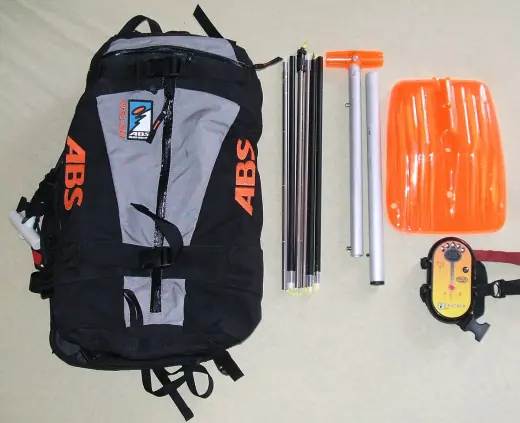
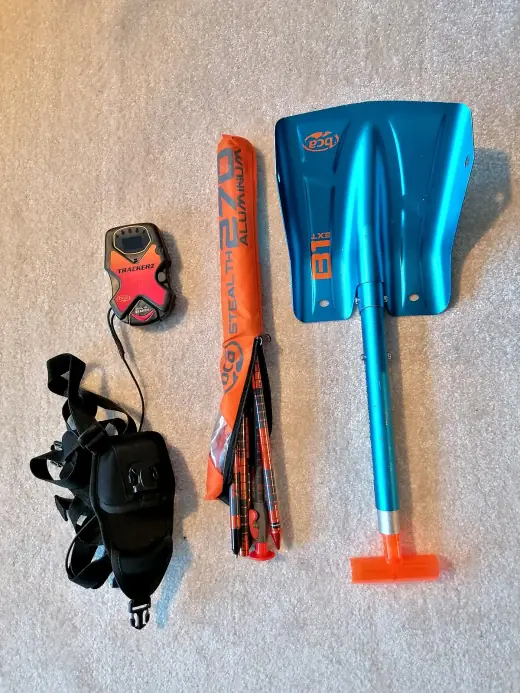
What avalanche equipment costs, and what it does
Transceiver, probe and shovel come as a set from around CHF 580, or from about CHF 400 bought separately. An airbag adds CHF 560 to over 1,000. What each piece actually achieves, why the shovel is the most underrated item, and what the equipment cannot do.
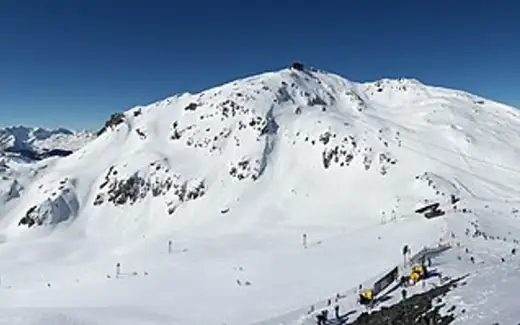
Where you can practise transceiver searching: 27 facilities in Switzerland
More than two dozen Swiss ski areas have a permanent practice facility for avalanche transceiver searching. Use is mostly free and needs only a valid lift pass. The complete list, linked to our resort pages, and what such a facility can do.
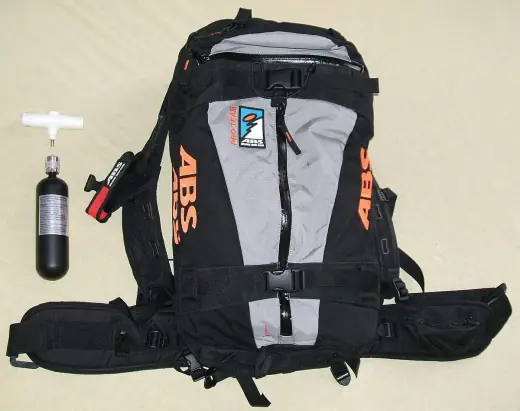
What an avalanche airbag actually does: 22 per cent against 11
The largest study of avalanche airbag effectiveness assessed 424 serious accidents. The result: mortality falls from 22 to 11 per cent. But one airbag in five fails to inflate, and in six out of ten of those cases the reason is the user. What the figures give you once that is priced in.
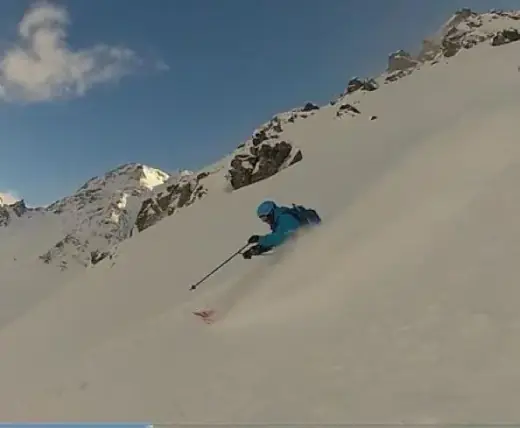
Where freeriding happens in Switzerland: the vertical gives it away
Freeriding needs vertical drop, and our dataset holds it for all 87 areas. Zermatt leads with 2,263 metres; the median is 1,085. The analysis, what it says about the well-known freeride addresses, and where the figure misleads.
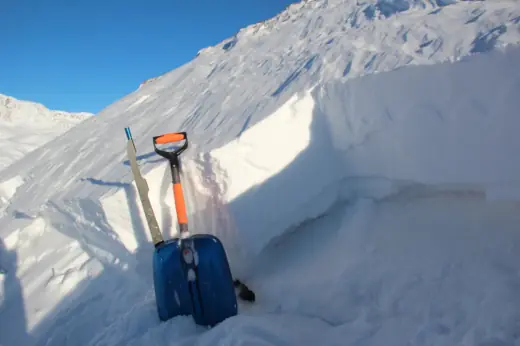
Reading the avalanche bulletin: the colour is the least important part
Most people look at a number in the bulletin and close the app. The usable information sits underneath: the avalanche problem, the aspect rose, the elevation band and the time of issue. What each part means and the order in which to read it.
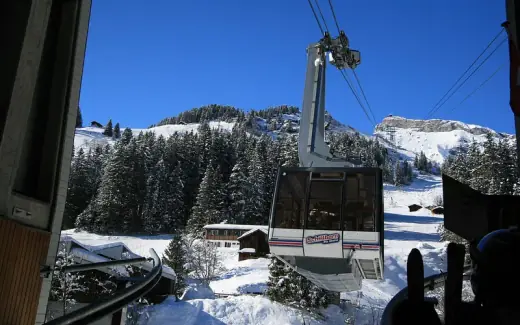
Who pays for a rescue off the piste?
A helicopter operation costs CHF 3,500 to 4,500; an avalanche recovery runs into five figures. Basic health insurance covers half of it, up to CHF 5,000 a year. What really makes the gap large, and why a CHF 40 Rega membership is the most underrated line in a ski budget.
Touring gear: rent or buy? The sums work out differently from alpine skiing
A complete touring set-up costs from around CHF 1,400, hire is CHF 40 to 70 a day. On paper buying pays from about 25 days. Why that figure misleads anyway, and which item to buy first even though it is the cheapest.
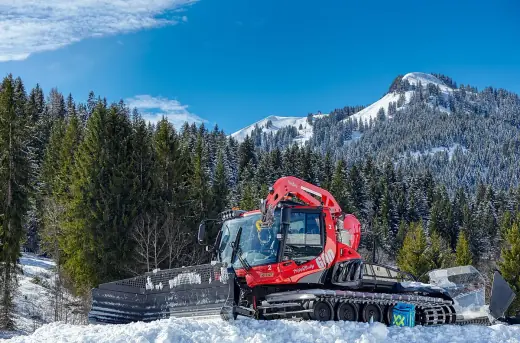
Ski touring on the piste: allowed, but not everywhere and not at night
Skinning up groomed pistes is generally permitted in Switzerland. Outside operating hours it becomes lethal, for a reason few people have on their radar: at night the grooming machines work on a steel winch cable several hundred metres long.
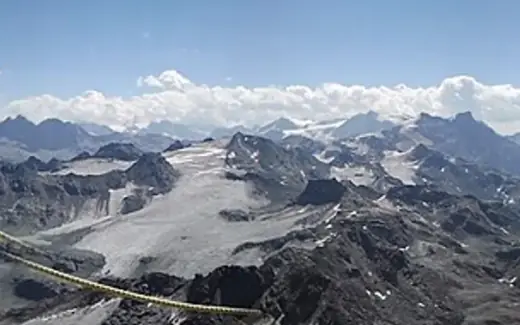
The Bec des Rosses: why the world's hardest freeride test stands in Switzerland
3,223 metres high, around 600 metres of competition vertical, slope angles around 43 degrees: the mountain above Verbier has hosted the Freeride World Tour final since the beginning and counts as the hardest terrain on the calendar. A portrait, and what the Olympic decision changes.
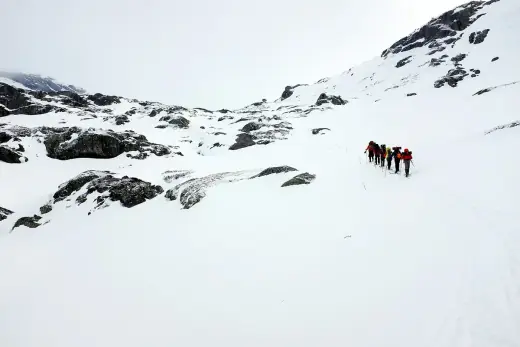
Your first ski tour: what has to happen first, and in what order
A first ski tour is rarely a question of fitness. It is a question of sequence: what you learn where, what you hire, what you buy, and when you first leave the piste. An honest progression, with costs, and without pretending an article can replace a course.
The first 15 minutes: why avalanche rescue is almost never a rescue question
Someone completely buried and dug out within the first 15 to 18 minutes survives with about 90 per cent probability. After 35 minutes it is about 30. What that curve says about organised rescue, why a quarter of the victims never suffocate at all, and where the figures are uncertain.
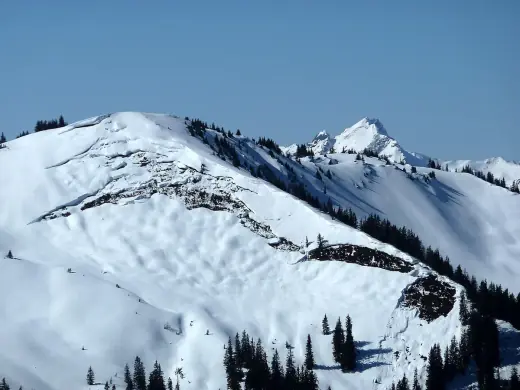
The five avalanche danger levels: why level 3 is not the middle
Danger level 3 applies on around 30 per cent of winter days and accounts for around 50 per cent of avalanche deaths. Level 4 applies on 2 per cent of days and accounts for 10 per cent. What the scale actually says, why it is not linear, and why Switzerland has been the only country issuing sub-levels for four winters.
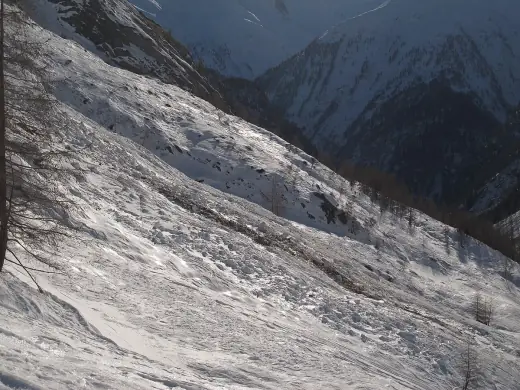
38 per cent more avalanche accidents, 7 per cent more deaths: the winter of 2025/26
In Europe it was the deadliest avalanche winter in eight years, with 146 people killed. In Switzerland the number of accidents rose by 38 per cent, the number of deaths by only 7. Why the two figures diverge, and why the Swiss tally comes out above or below average depending on which mean you pick.
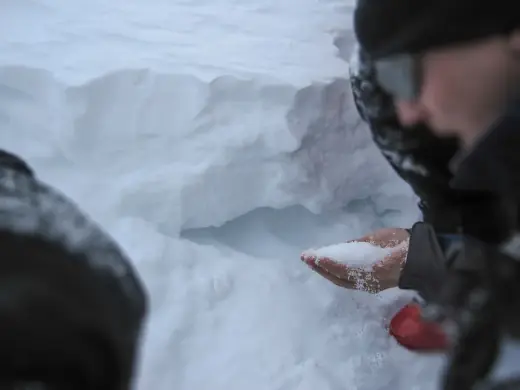
The persistent weak layer: the problem you cannot see
A thin snowpack in November is more dangerous than none at all. Why little snow produces the deadliest layer of the winter, how that can be worked out with arithmetic, and why this is the one avalanche problem that regularly catches experienced ski tourers.
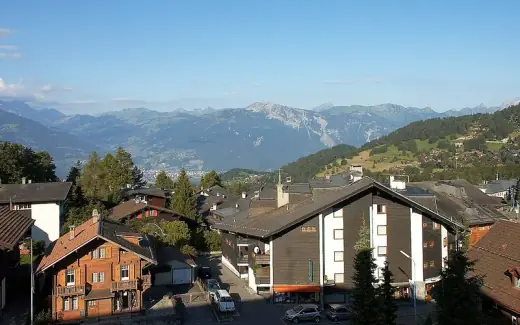
Which Swiss resort suits beginners? The answer is in the piste colours
Zermatt has 360 km of piste and only 22 per cent of it is blue. Villars-Gryon-Diablerets has 125 km and 60 per cent. Both offer beginners about the same number of blue kilometres, but a completely different day. The analysis across 83 Swiss resorts, with the figures behind it.
Rent or buy ski gear? The sum, and what to rent where
A ski set costs CHF 69 a day to rent but only CHF 293 for a whole week. That tiering decides the question: ski one week at a time and renting almost always wins. Spread ten day trips across a winter and it does not. Plus the one item you should own even if you rent everything else.
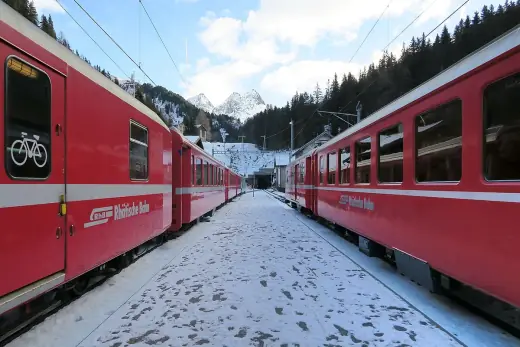
Skiing in Switzerland without a car: what actually works
17 ski areas are under two hours from Zurich, 26 from Bern. Direct trains are another matter: of 85 resorts, exactly one is reachable from Zurich without changing. What the railway does well, where it fails, and what Snow'n'Rail is really worth.
What a Swiss ski day really costs: the whole sum
The lift pass is rarely the biggest item. A ski day from Zurich costs between CHF 94 and 264 depending on resort and ticket choice, and the largest single lever is not which resort you pick but when you buy the train ticket. Five worked examples.
Is the Magic Pass worth it? The maths with real numbers
The Magic Pass currently costs CHF 482 and covers 95 stations. We worked out how many ski days it takes to break even: ten. And checked which resorts are actually included. Of Switzerland's fifteen largest ski areas, two are.
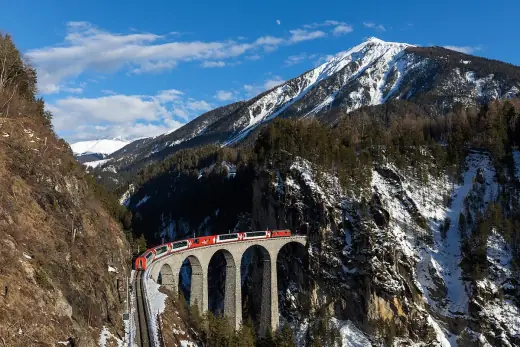
Snow'n'Rail: every Swiss resort in the scheme, and what it actually saves
All 27 SBB Snow'n'Rail destinations with verified discounts, plus the arithmetic on when taking the train really pays. Between CHF 5 and CHF 28 a day, and that is not the whole difference.
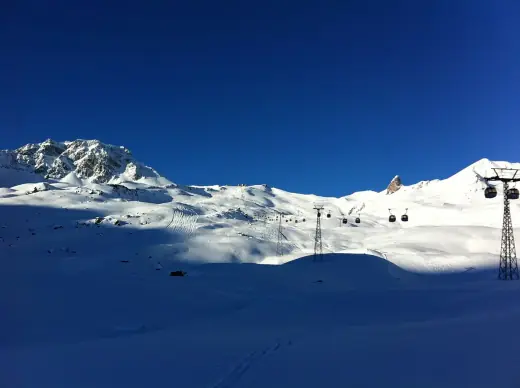
What does skiing in Switzerland actually cost?
Day passes from CHF 40 to 95, median 58. What a ski day really costs once you add travel and food, where you get the most piste per franc, and which discounts are worth it. Numbers from all 85 resorts.
Season passes 2026/27: where buying early really pays off
Magic Pass from CHF 419, dynamic pricing everywhere: an overview of Switzerland’s season pass landscape – and the three rules that make early buying work.
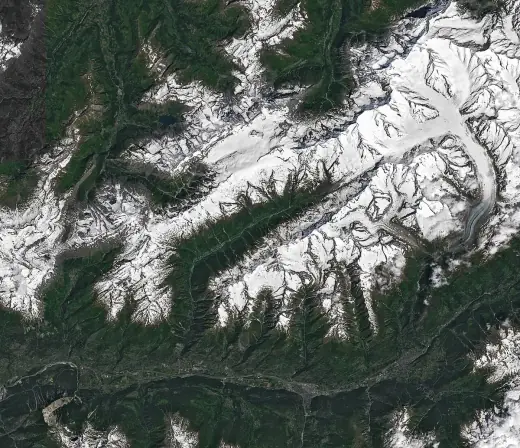
Why Alpine rock is falling apart: permafrost, explained
In winter 2024 the active layer at Schilthorn failed to refreeze for the first time at any Swiss monitoring site. At ten metres depth, permafrost has warmed by more than 0.8 °C since 2014. What that has to do with the closures on Mont Blanc, the Matterhorn and at Oeschinensee, and what it does not.
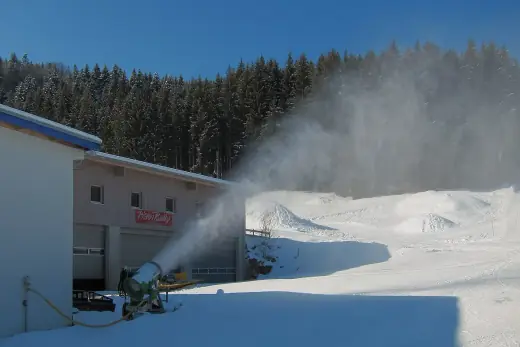
When is a ski resort actually allowed to make snow? The rules in Switzerland and Austria
The canton of Bern runs a fixed calendar from 15 October to 15 March, Grisons abolished its dates in 2007, and Tyrol grades them by altitude. The biggest difference lies elsewhere, though: in the additive in the water, permitted in Switzerland and banned in Tyrol.
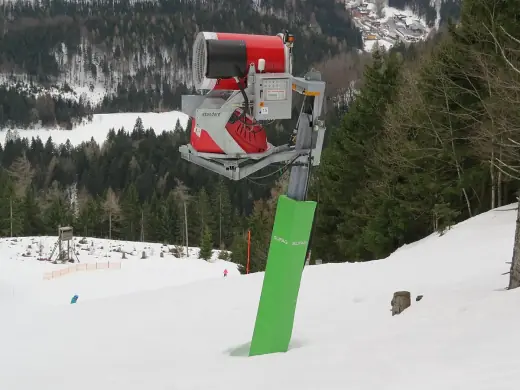
What does a kilometre of machine-made snow cost in water and power?
65 gigawatt hours of electricity and 13 billion litres of water per winter in Switzerland. We broke the figures down to a single kilometre of piste, cross-checked them – and found a contradiction the industry itself concedes.
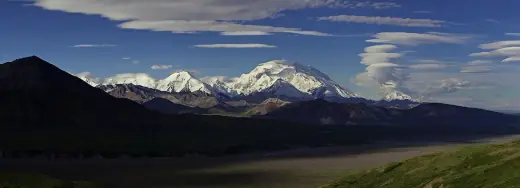
Weather or climate? The difference in five minutes
Record snow in Chile, record heat in Europe – both in the same month. Why that is not a contradiction, what separates weather from climate, and how to tell whether a claim is serious.
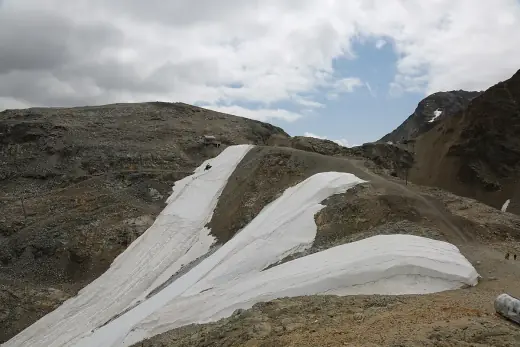
Glaciers under fleece: what the white sheets actually achieve
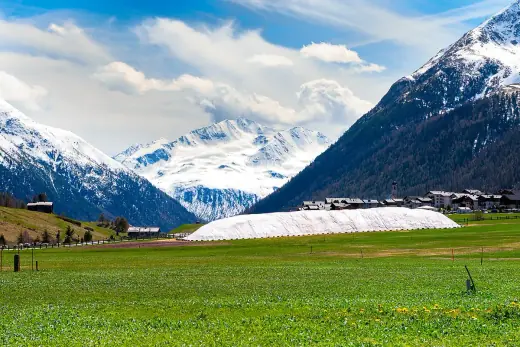
Around 60 per cent less ice melts under the covers. And yet the method saves no glacier at all: 0.02 per cent of Switzerland's glacier surface is covered, and covering all of it would cost over a billion francs a year. The figures, the successes and the plastic problem.
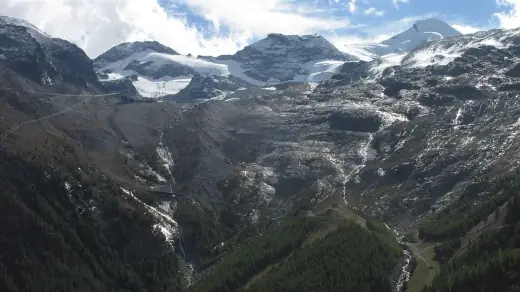
Why Zermatt had to close and Saas-Fee did not
Zermatt reaches 3,899 m and shut down first. Saas-Fee tops out at 3,600 m and lasted longer; the Stelvio Pass at 3,450 m is the only one still running. Why the altitude figure everyone quotes is the wrong number, and which three factors actually decide it.
Chronicle: the summer ski areas that no longer exist
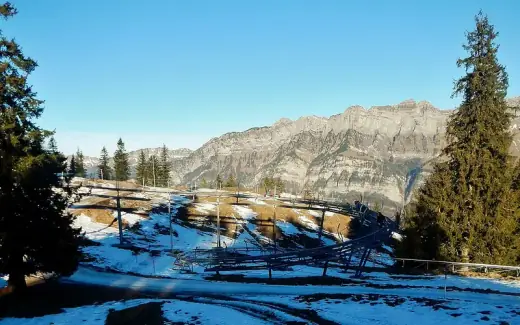
In the 1980s the lifts were running in July on more than 20 Alpine glaciers. Since 15 August 2026 there are none. The chronicle of a quiet disappearance, from Laax in 1992 to the Stelvio in 2026.
Why 2022 was the collapse summer
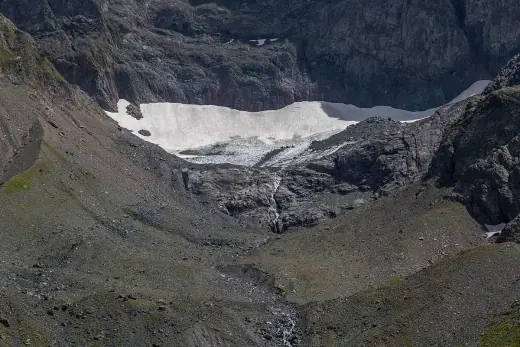
Around 6 per cent of Swiss glacier ice disappeared in a single year. 2022 was the summer that broke summer skiing – the anatomy of an extreme year.
From the news
All 26 reports →Will the Sölden World Cup go ahead? The figures say yes, and the ski area still stays shut
On 24 and 25 October the alpine World Cup is due to open on the Rettenbach glacier. At 2,900 metres, 86 hours over the next sixteen days are cold enough to make snow; nine hundred metres lower, ten Swiss areas together manage 95. Why a race is easier than a season.
The warmest September in 36 years. It says almost nothing about the winter
September 2026 was the warmest at 2,000 metres in our series. We ran the numbers on 35 winters: after the ten warmest Septembers, 316 centimetres of snow fell on average; after the ten coldest, 267. The relationship points the opposite way to the one people assume, and it is weak.
Too warm to make snow: the cold window has slipped five days
Five days ago the first usable snowmaking nights fell on 4 to 6 October; now they fall on the 9th and 10th. Over sixteen days, 95 of 3,840 hours are cold enough, and seven of ten areas get not one centimetre of snow. The figures, and what they mean for the season start.