In the history of Alpine glaciers there is a before and an after, and the summer of 2022 sits between them. In a single year, Swiss glaciers lost around 6 per cent of their entire ice volume. For context: a “normal” bad year cost about 1 to 2 per cent before that. 2022 was not an outlier on the high side – it was a new category.
The anatomy of an extreme year
1. A winter almost without snow. The winter of 2021/22 brought the Alps exceptionally little snow. The protective winter blanket that normally insulates glaciers well into the summer was thin – the melt season started with an empty buffer.
2. Saharan dust in spring. Several dust events turned the snow orange in March 2022. Darker snow absorbs more sunlight, so the snowpack melted away weeks earlier than it otherwise would have.
3. Heatwave upon heatwave. The summer of 2022 strung heat periods together. On 25 July 2022, the freezing level over Switzerland rose to 5,184 metres – the highest value ever measured. Even on the summits of the 4,000-metre peaks it rained instead of snowing.
What happened on the glaciers
- Zermatt, which sees itself as a 365-day ski area, had to interrupt summer skiing for around 50 days – a historic break.
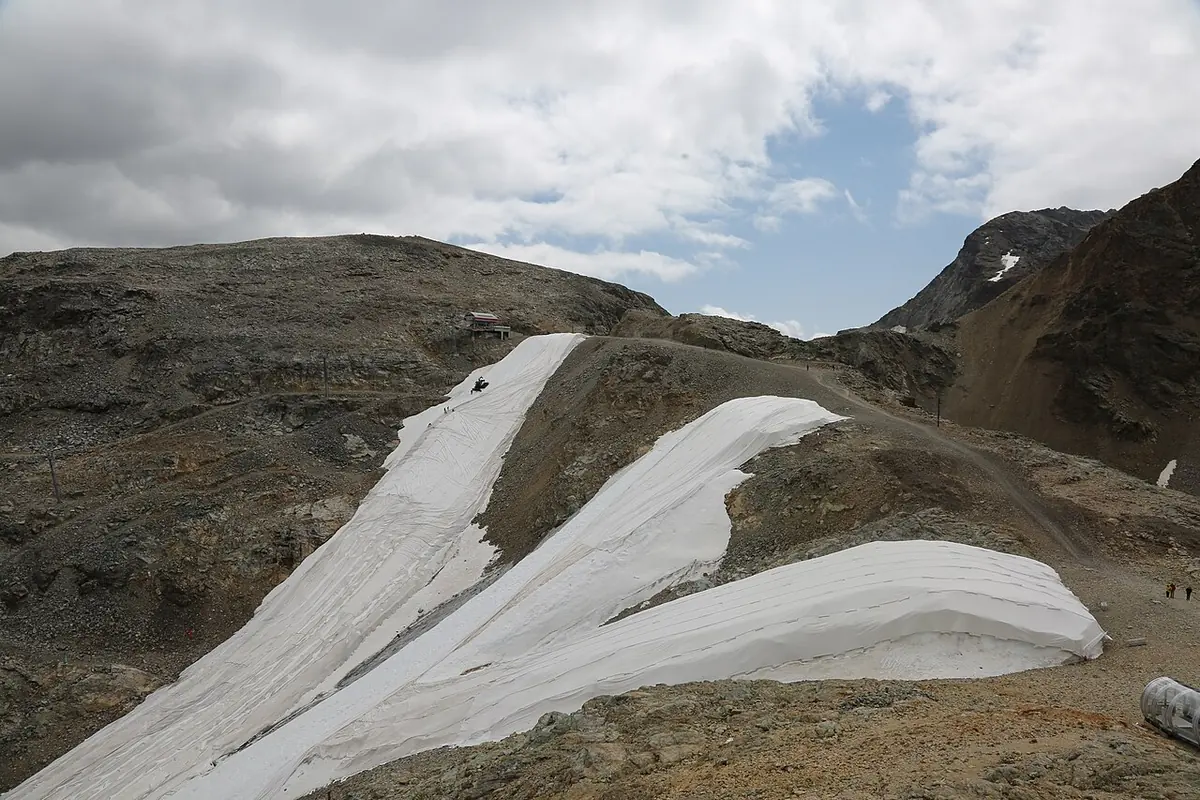
- The Stelvio Pass stood still for two months in the middle of high summer – on a glacier that had carried July operations for decades.
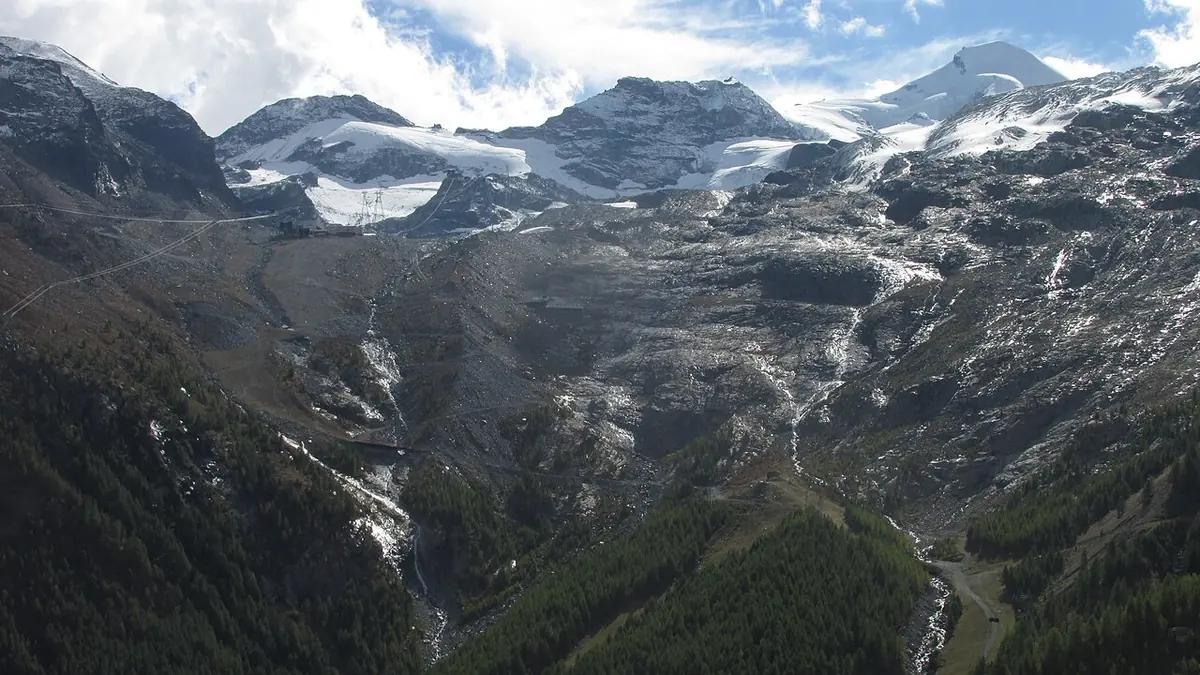
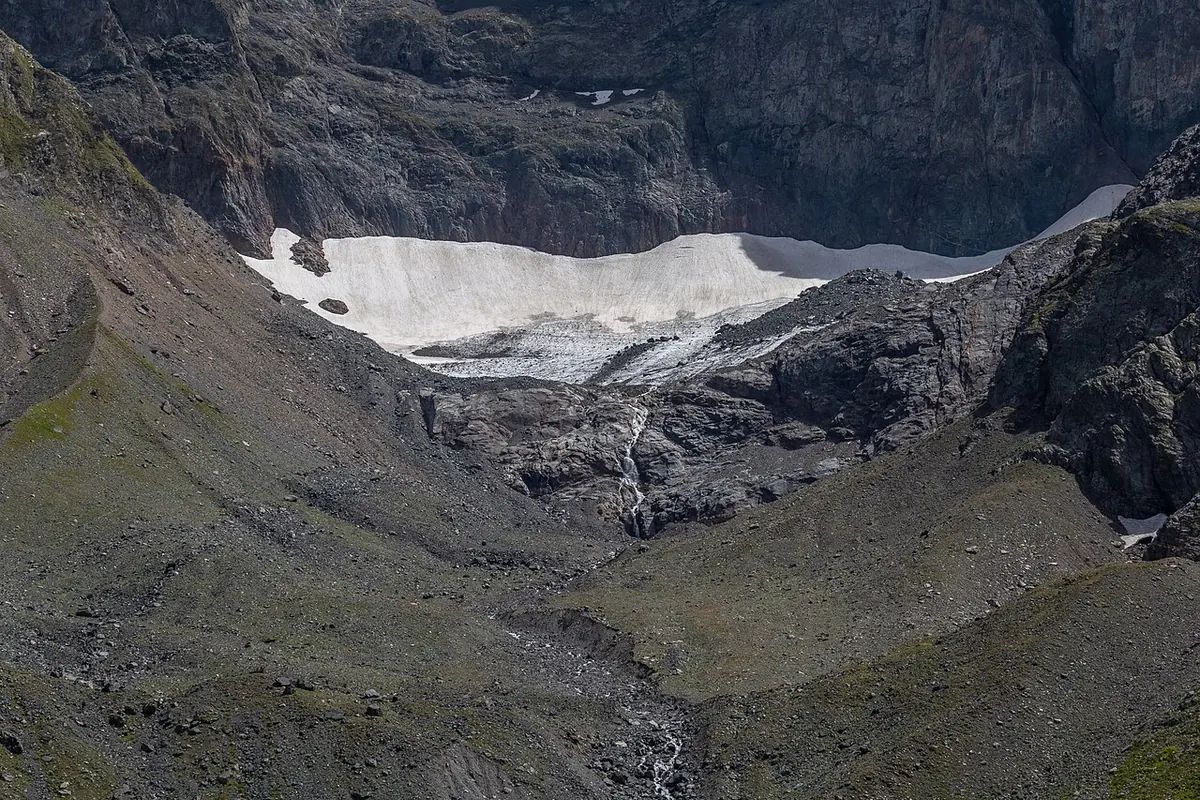
- On numerous glaciers, bare grey ice emerged in late summer, shot through with new crevasse zones. GLAMOS measuring teams found losses of several metres of ice thickness at individual stakes – in one year.
And then came 2023
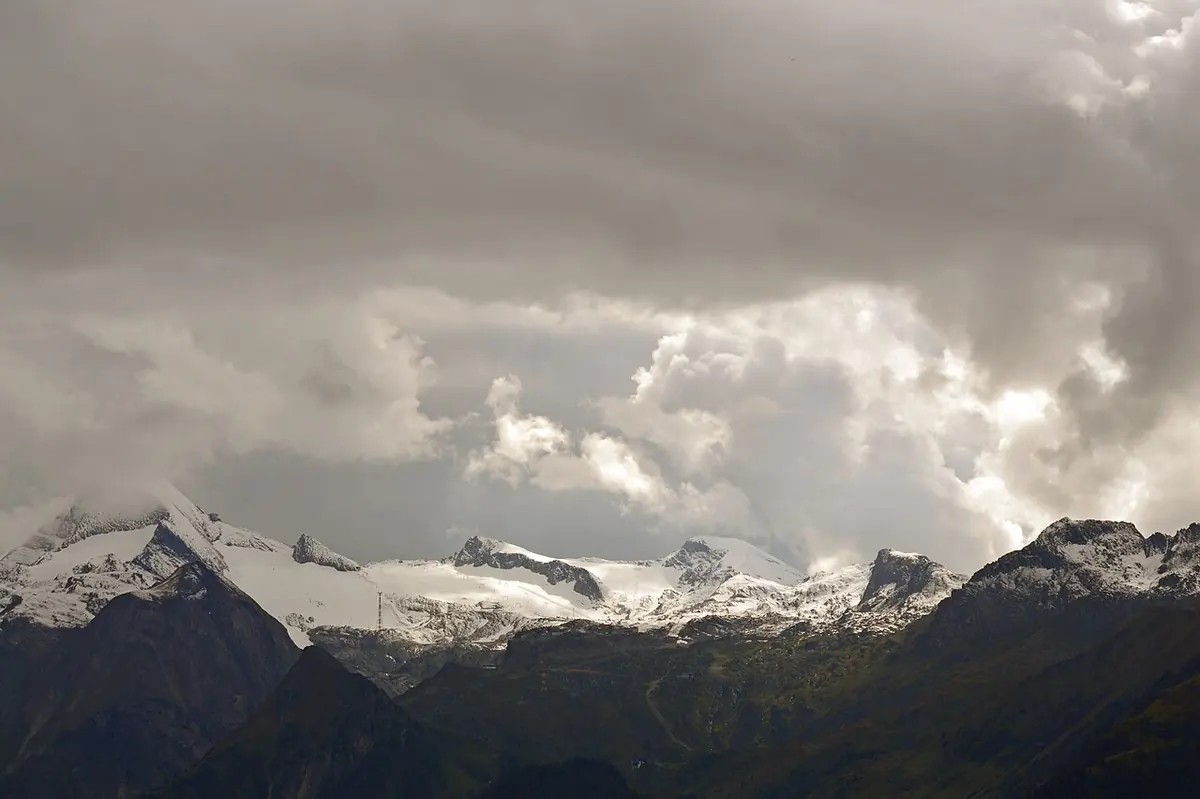
Anyone hoping for a compensating year was disappointed: 2023 cost another 4 per cent of the volume. In just two years, Swiss glaciers thereby lost around a tenth of all their ice. The consequences for ski operations followed promptly: the Kitzsteinhorn ended summer skiing for good, and the glacier lifts on the Dachstein were dismantled.
Why 2022 still reverberates
2022 cost the industry an illusion: that altitude alone protects you. Since then a new calculation applies – what matters is not how high a glacier lies, but whether a load-bearing snow cover survives high summer. The hot summer of 2026, whose glacier loss day on 29 June fell almost on the 2022 record, shows that the extreme year was no accident. It was a preview.
The current glacier situation in 2026 →
Sources: GLAMOS / ETH Zurich (mass balances 2022/2023), MeteoSwiss (freezing level record of 25 July 2022), Zermatt Bergbahnen, S.I.F.A.S. – compiled in the report “Das Ende des ewigen Schnees” (June 2026).