Update, 6 August 2026: Saas-Fee is suspending summer skiing too. The last operating day is 9 August; from 10 August the Fee glacier stands still. Switzerland now has no summer skiing at all, and the Stelvio Pass is the only area left in the Alps. The full report →
Ever since Zermatt halted summer skiing on 31 July 2026, the same question keeps coming up: Zermatt has the highest ski terrain in the Alps, reaching 3,899 m. Saas-Fee is a good 300 metres lower, practically next door in the same canton, and it is still running. The Stelvio Pass only reaches 3,450 m and it is running too. How does that work?
The short answer: the altitude figure everyone quotes is the wrong number. It describes the highest point of a ski area. But a piste does not fail from the top down, it fails from the bottom up. And at the bottom, the three areas are far closer together than the headlines suggest.
The comparison that actually matters
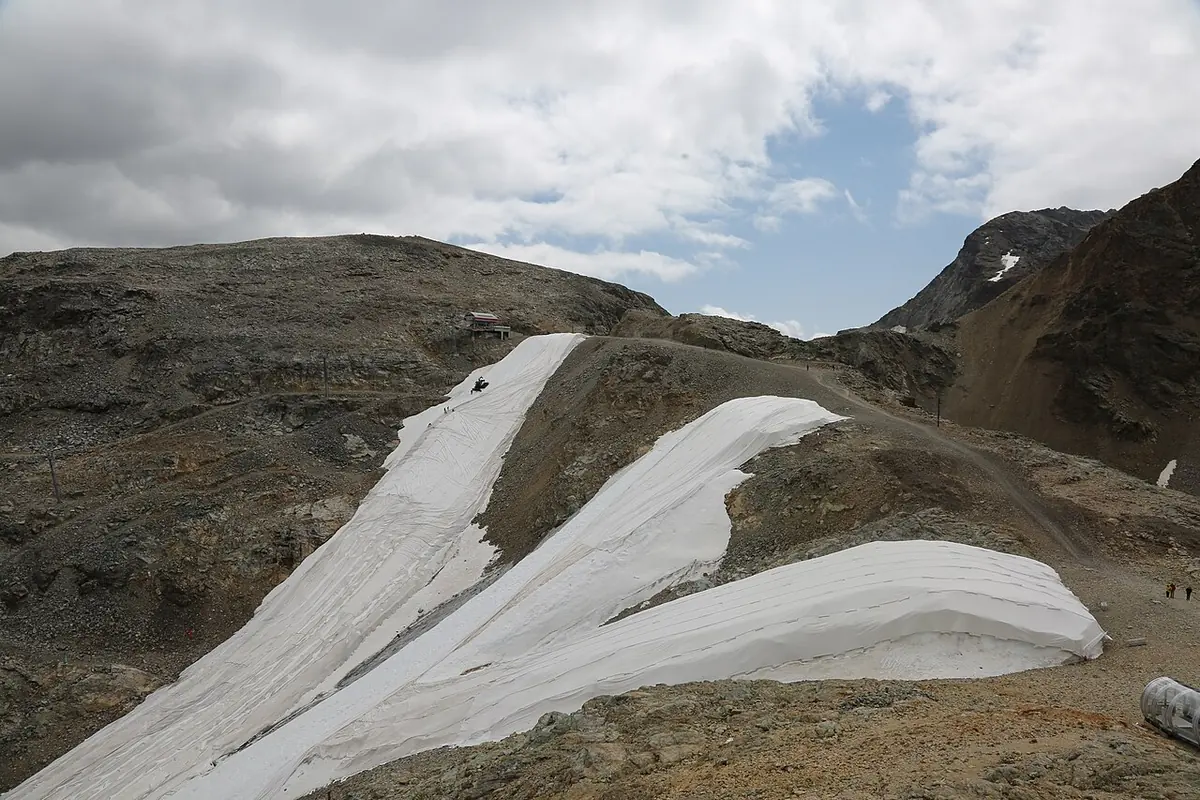
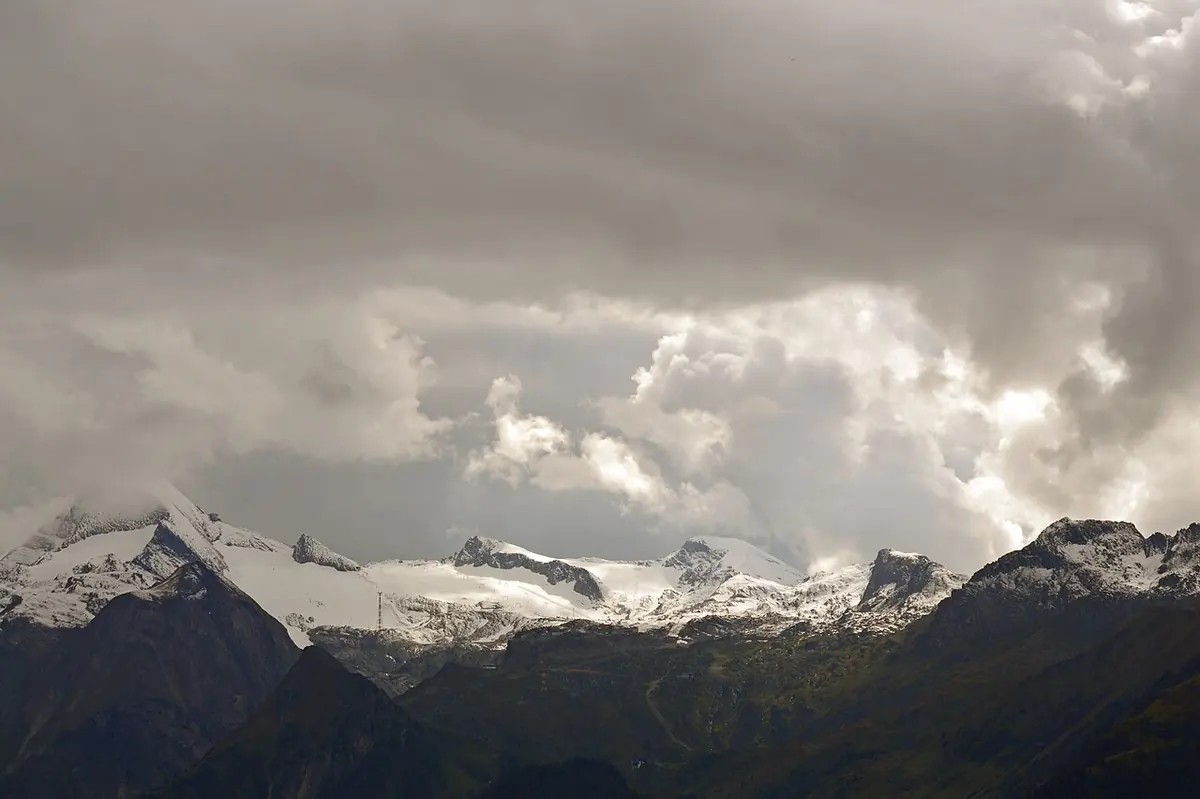
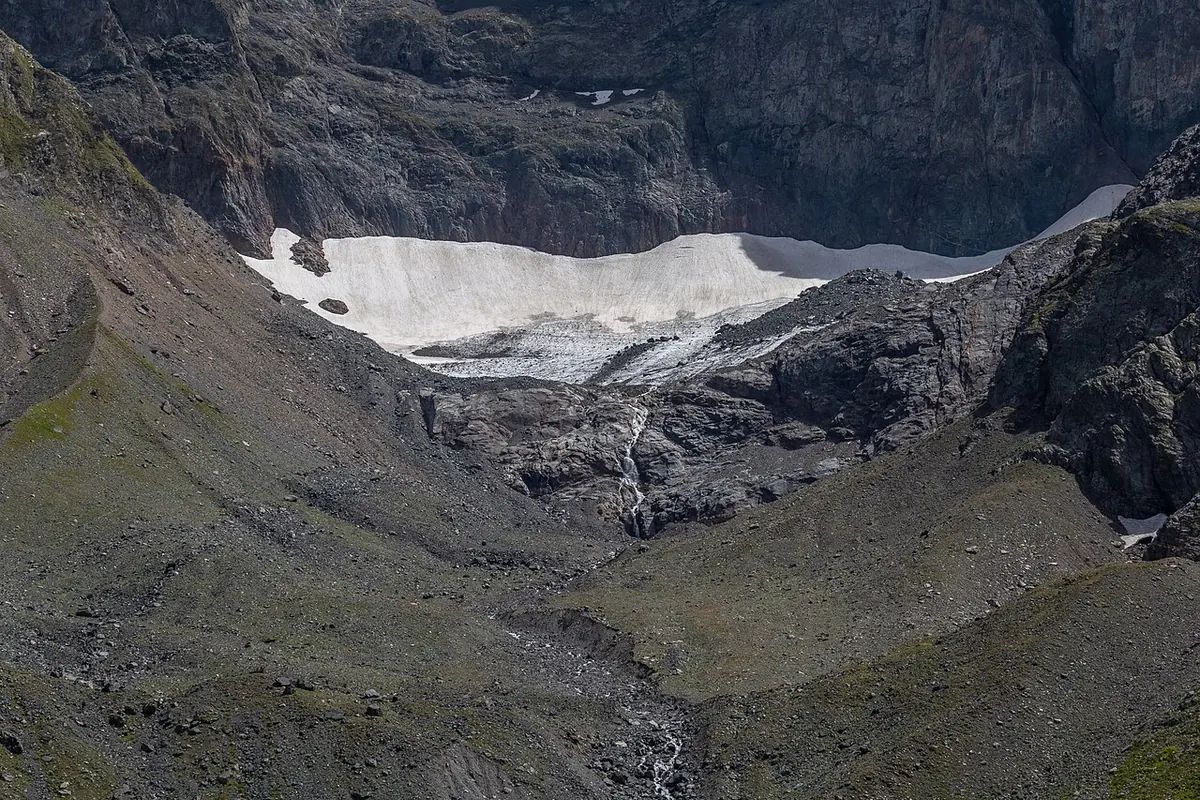
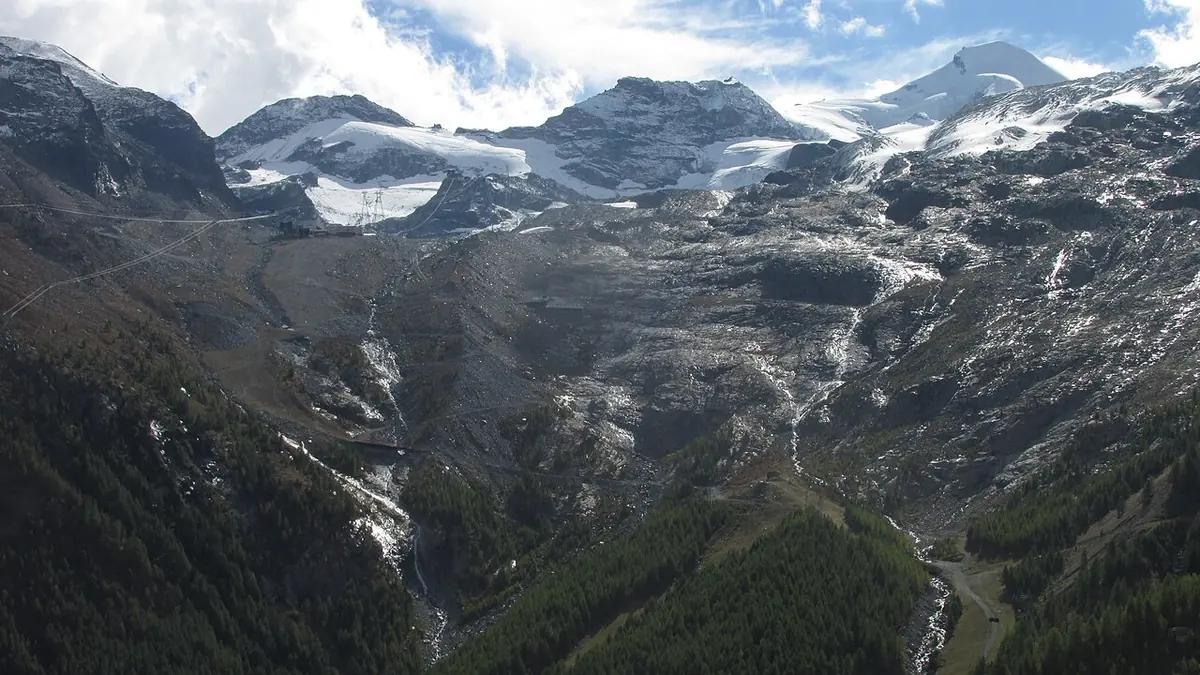
What counts in summer is not the highest lift station but the band in which skiing actually happens. Zermatt’s summer terrain lies on the Upper Theodul glacier between Testa Grigia (3,479 m) and the Gobba di Rollin (3,899 m). In high summer Saas-Fee skis exclusively on the Fee glacier above Mittelallalin (3,456 m), up to roughly 3,600 m. The Stelvio Pass serves the glacier slopes above the Livrio station.
Zermatt and Saas-Fee start at virtually the same altitude: 3,479 against 3,456 metres, a difference of 23 metres. In the mountains that is nothing. Zermatt has more reserve at the top and none at the bottom. And because the piste softens at its lowest point first, the lead everyone quotes is worthless to the operation.
For the Stelvio Pass the altitude gap is real: it skis a good 280 metres lower than Saas-Fee. Different reasons explain why it is still running, and they come further down.
Factor 1: what the lift company itself said
Zermatt Bergbahnen gave reasons for the shutdown, and those reasons contain not one word about altitude. Four points are named: persistently high temperatures, the absence of night-time cooling, repeated thunderstorms, and changed snow and glacier conditions. There is a fifth that most coverage skips over:
“The challenges facing the technical maintenance of the transport facilities are constantly increasing due to these changed conditions.”
That is a remarkable sentence. Zermatt’s summer lifts stand on the glacier, not beside it. If the ice under the pylons melts and moves, it is not just the piste that becomes a problem but the installation itself. An area that puts its drag lifts on a 4 km² firn field has a maintenance problem of a different order from an area with three lifts in a confined space.
The second point, the missing night-time cooling, is the real core. What matters for ski operations is not how warm it gets during the day but whether the snow refreezes overnight. Without frost the surface stays soft, the piste can no longer be safely groomed, and bare ice with open crevasses appears underneath. And that night-time cooling is currently missing across the entire Alps, as our outlook for the next two weeks shows.
Factor 2: the size of the promise
Zermatt has marketed itself for decades as Switzerland’s only year-round ski area and grooms up to 20 kilometres of piste on the Theodul glacier in summer. Saas-Fee only opens its glacier season in mid-July and, in high summer, runs until 12 noon.
That is not a detail, it is a different business model:
Add the daily rhythm: in high summer Saas-Fee runs from 7 a.m. to 12 noon and then closes. Shutting at midday means only having to hold the snow cover through the cooler half of the day. Running a year-round area and grooming 20 kilometres of piste on an open high plateau on top of that is the bigger promise, and therefore the longer fall. Saas-Fee opens when it can; Zermatt had to close because it is otherwise always open.
That this is no free pass is shown by history: Saas-Fee has already cancelled a summer season outright, after a low-snow winter and an extremely hot summer. No area in the Alps is immune to this summer.
Factor 3: plateau versus slope, and why “north-facing” explains less than you think
That leaves the argument you read in every forum: Saas-Fee’s terrain faces north. Geographically that is true. The South Fee glacier lies on the north flank of the Allalinhorn (4,027 m), and large parts of it form the summer ski terrain. Zermatt’s summer terrain, by contrast, lies on Plateau Rosa, a largely flat, open high plateau.
The catch: in August the compass direction matters far less than most people assume. At 46 degrees north the sun stands 61 degrees above the horizon at midday in early August. Work out the angle of incidence for a surface tilted 20 degrees and you get, at midday:
So at high-summer midday a north slope receives about a quarter less than flat ground, not half. In spring the difference would be far larger. Explaining summer snow conditions with “north-facing” alone falls short.
What the north flank does deliver is something else: a glacier basin below a four-thousander is shaded by the flanking ridges morning and evening, collects wind-drifted snow, and sits in a pool of cold air. An open high plateau like Plateau Rosa has none of that. It has a clear horizon in every direction and loses snow to the wind rather than gaining any. The advantage lies in the shape of the terrain, not in the compass needle.
And the Stelvio Pass, 280 metres lower?
Here a factor applies that neither Swiss area has: the Stelvio Pass does not operate in winter at all. The pass road is closed from November to May, and the lifts run only from late May to early November – in 2026 from 30 May to 1 November.
That means the winter snow lies undisturbed for half a year. It is not skied, not pushed around, not worn down to the base layer. When operations start in May, the cover is a settled, naturally consolidated winter snowpack. A year-round area enters the summer with a cover that has been groomed and skied daily since December.
Then there is the terrain: summer operations rest on six installations and around 9 kilometres of piste, 89 per cent of it easy – a compact area that can concentrate on the strip that still holds. The Stelvio Pass is not immune either: in 2017 it had to end its summer season early in August, after low-snow winters and a freezing level above 4,000 metres.
The short version
| Zermatt | Saas-Fee | Stelvio Pass | |
|---|---|---|---|
| Summer ski terrain | 3,479–3,899 m | 3,456–3,600 m | 3,174–3,450 m |
| Shape of terrain | open high plateau | basin on the north flank | slopes above Livrio |
| Business model | year-round | season from mid-July | summer only, closed in winter |
| High-summer hours | full day planned | until 12 noon | 7.30 a.m.–5 p.m. posted |
| Lifts standing on glacier ice | yes, over a wide area | yes, compact | yes, compact |
| Status on 6 August 2026 | halted since 31 July | last day 9 August | operating |
The honest summary: Zermatt did not fail because it is high, but despite being high. Altitude only protects the upper edge of an area. What decides things is the snow cover at the lowest point, the shape of the terrain below it, and the size of what you promise your guests. On all three counts Zermatt has the harder case.
And the real story is not which area happens to still be running. It is that of more than a dozen summer ski areas the Alps once had, one is left from 10 August.
As of 4 August 2026. Operating information changes daily – check with the lift companies before travelling.
Sources: statement by Zermatt Bergbahnen of 31 July 2026; Snow-Forecast for the wording on technical maintenance; Wikipedia on the Theodul glacier and on the Fee glacier for glacier geometry and aspect; skiresort.com for the Stelvio Pass figures; Saastal Bergbahnen summer timetables; solar geometry calculated in-house.