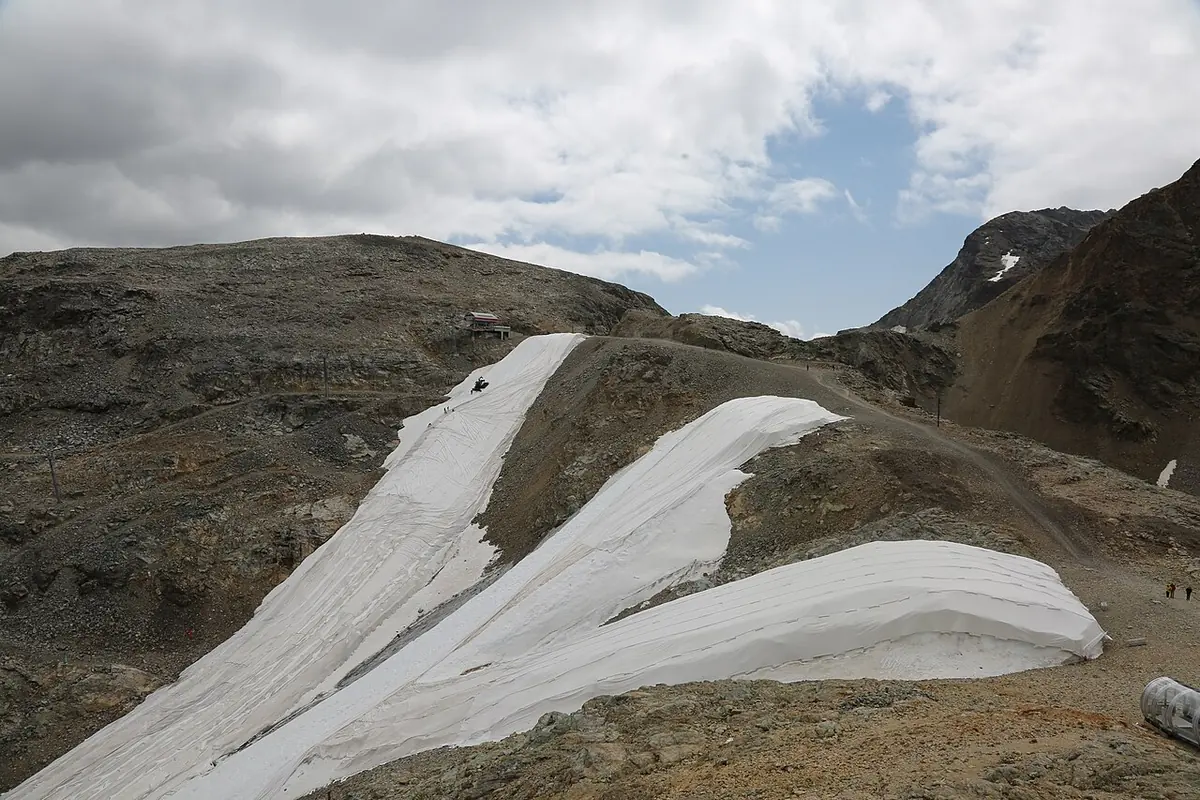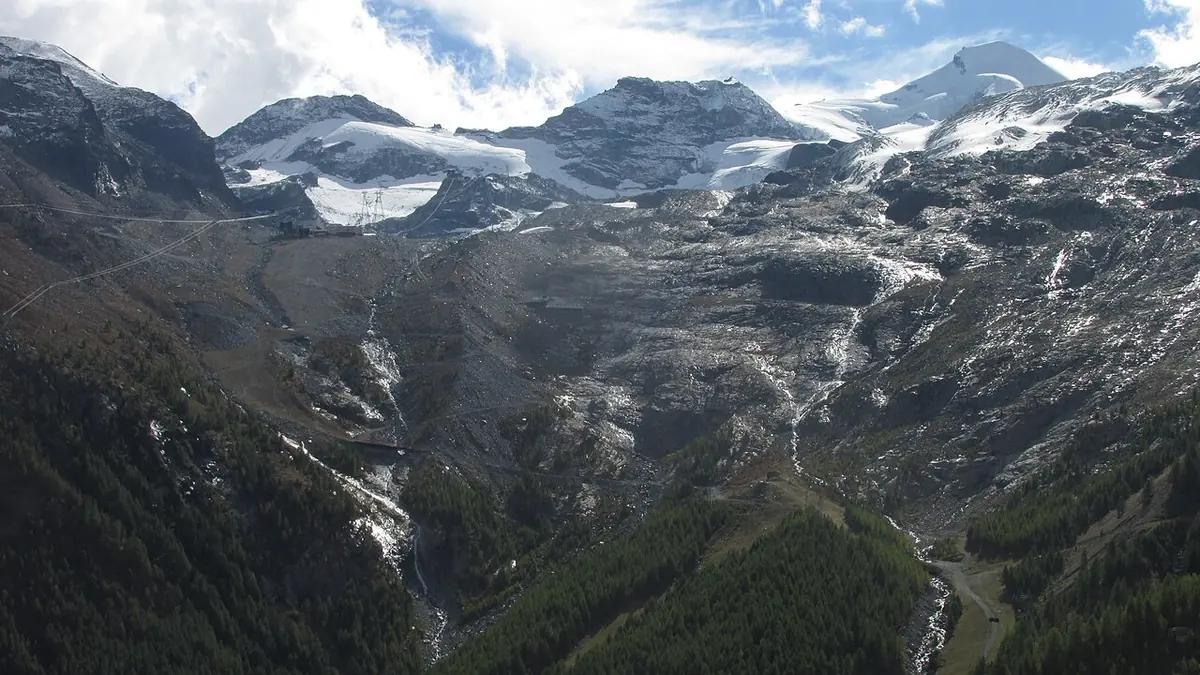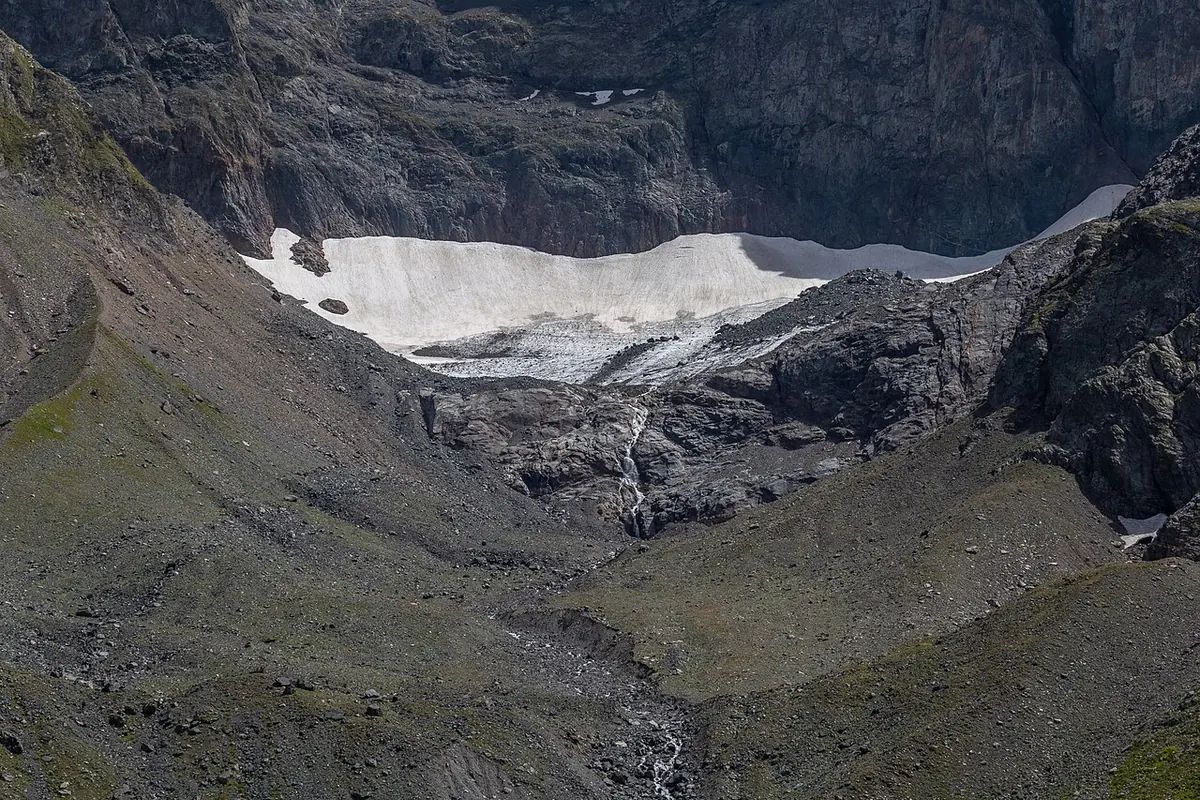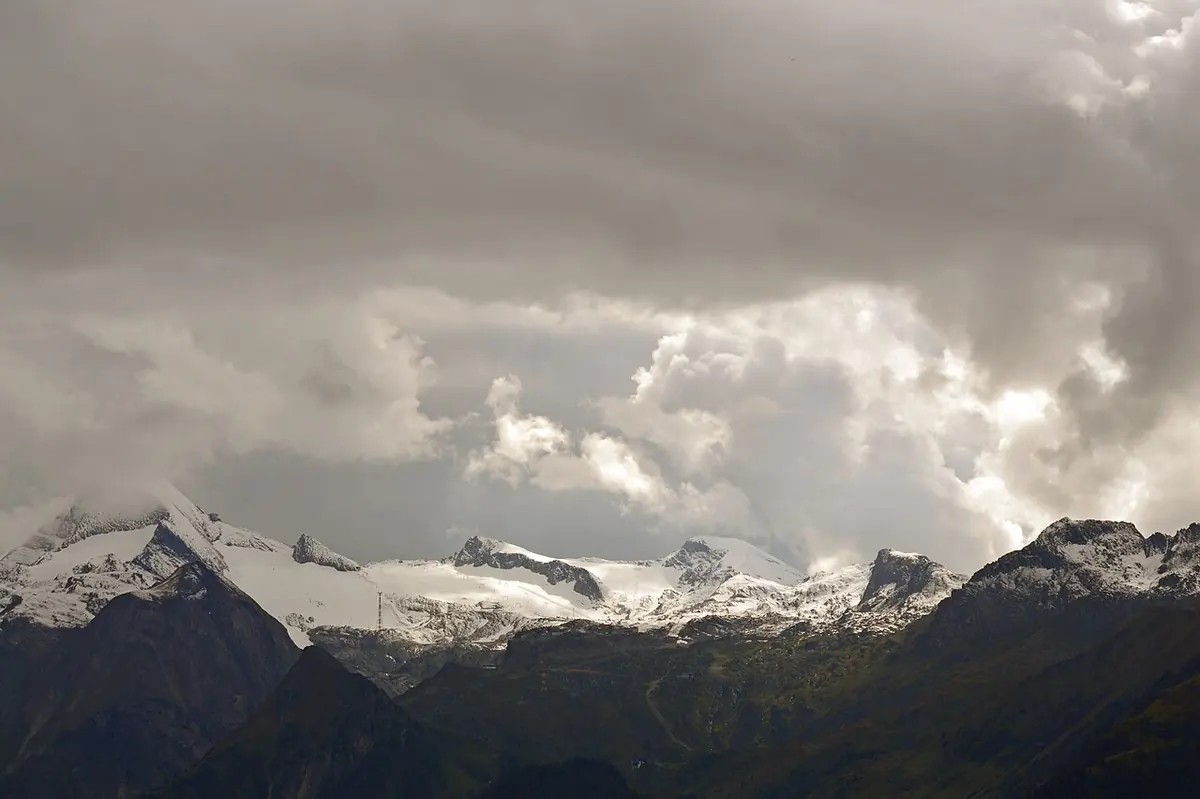
Tell someone today that in the 1970s and 80s you could ski in July on more than twenty Alpine glaciers and you will get disbelieving looks. Corvatsch in August? Titlis in July? All perfectly normal – until the glaciers began to shrink. This is the chronicle of the retreat.
Switzerland: the early retreat
| Year | Resort | Note |
|---|---|---|
| 1992 | Laax (Vorab) | once a summer training base for the national teams |
| 1993 | St. Moritz / Corvatsch | summer skiing at 3,300 m |
| 1998 | St. Moritz / Diavolezza | still runs a glacier autumn season today |
| 1999 / 2013 | Verbier / Mont Fort | a retreat in two stages |
| 2004 | Glacier 3000 / Gstaad | summer skiing dropped, autumn season kept |
| 2006 | Engelberg / Titlis | the last summer operation in central Switzerland |
Switzerland lost its summer ski areas early – the comparatively low-lying glacier tongues melted out first. What remained were the two highest sites: Zermatt (to 3,883 m) and Saas-Fee (to 3,500 m, today from mid-July).
Austria: from the Stubai shock to the Dachstein dismantling
- 2003 – Stubai glacier: the summer of the century ends summer skiing at Austria’s largest glacier area. A signal for the whole industry.
- In the years that follow, Sölden, the Kaunertal and the Mölltal also withdraw from midsummer – autumn and spring seasons remain.
- 2022/2023 – Kitzsteinhorn: the glacier area above Kaprun, once proud of summer skiing since 1965, ends summer operations for good.
- 2023 – Dachstein: the surface lifts on the glacier are dismantled. No monument, no restart – removal.
- 2026 – Hintertux: Austria’s last “365-day glacier” takes a planned summer break for the first time.
Italy and France: the great thinning
The list shrank south and west of Switzerland too. At Passo Presena, in Val Senales/Schnalstal and elsewhere, summer operations gave way to autumn seasons. In France, Les 2 Alpes and Tignes (Grande Motte) cut their summer windows drastically over the years – from “all summer” to a few weeks in early summer. What remains as genuine full-summer operation in Italy is the Stelvio Pass – at 3,450 m the highest-lying pure summer skiing classic in the Alps.
The ghost lifts
The 1970s were a cool, snow-rich phase: on some glaciers, lift installations were buried by snow and migrated into the ice. Today, exposed again by the melt, their bent pylons protrude from the ice – “ghost lifts” that silently document where people once skied in high summer.
Why resorts give up “even though there is still ice”
Summer skiing does not die when the glacier is gone – it dies years earlier:
- The snow cover melts away. You cannot groom a piste on bare ice.
- Crevasses open up – safety risk and grooming effort both explode.
- The glacier moves and shifts lift pylons that then have to be reset constantly.
- Demand falls, because slush from midday onwards and grey-brown pistes no longer fill a holiday brochure.
As of 6 August 2026, a single site still carries midsummer skiing in the Alps: the Stelvio Pass. Zermatt stopped at the end of July and Saas-Fee follows on 10 August. Where you can ski right now →
Sources: the report “Das Ende des ewigen Schnees” (June 2026), resort information (Zermatt Bergbahnen, S.I.F.A.S., Gletscherbahnen Kaprun, Planai-Bahnen/Dachstein, Zillertaler Gletscherbahn), contemporary reporting. Depending on the source, individual years are documented either as the “last summer season” or the “official closure” – we give the most commonly used figure and refine it as we go.
Update, 21 August 2026: this record has gained four new entries, and one of them ends an era. With the Stelvio on 15 August 2026, the last area in the Alps stopped its summer operation. The analysis is in No summer skiing left in the Alps.