Update, 20 September 2026: The state this article describes lasted twenty days. On 4 September S.I.F.A.S. resumed operations at the Stelvio, and on 19 September Val Senales opened its season. The sentence below describes the summer of 2026, not today. What stands is the finding: between 15 August and 4 September, for the first time, nobody was skiing anywhere in the Alps.
On 15 August 2026 S.I.F.A.S. stopped skiing on the Gentili glacier at the Stelvio pass. On its own that was a footnote. Taken together it was something else: from that day nobody in the entire Alps was skiing in summer.
As far as it can be documented, that has never happened before.
The three weeks
| Date | Area | Country | Reason given by the operator |
|---|---|---|---|
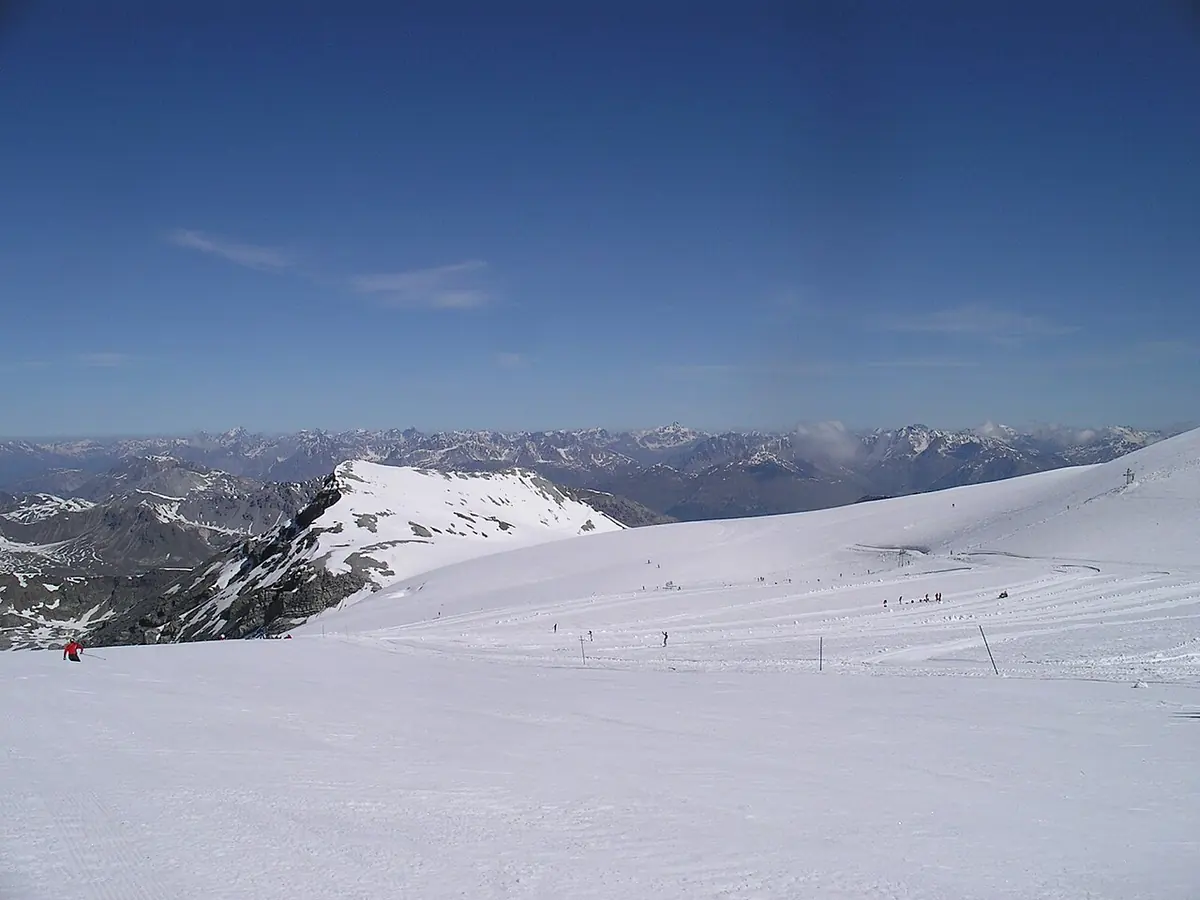
| 26 July | Hintertux glacier | AT | Demand in high summer, explicitly not the snow |
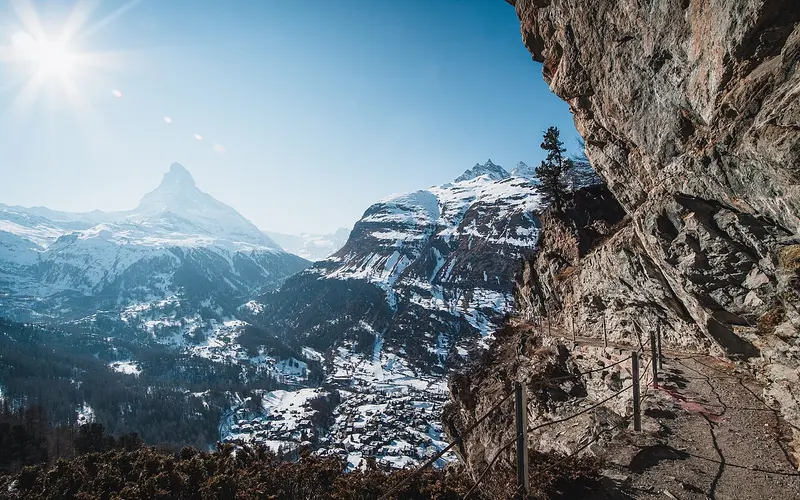
| 31 July | Zermatt / Theodul | CH | High temperatures, missing overnight cooling, thunderstorms |
| 9 August | Saas-Fee / Fee | CH | Pistes and glacier infrastructure no longer meet the standards |
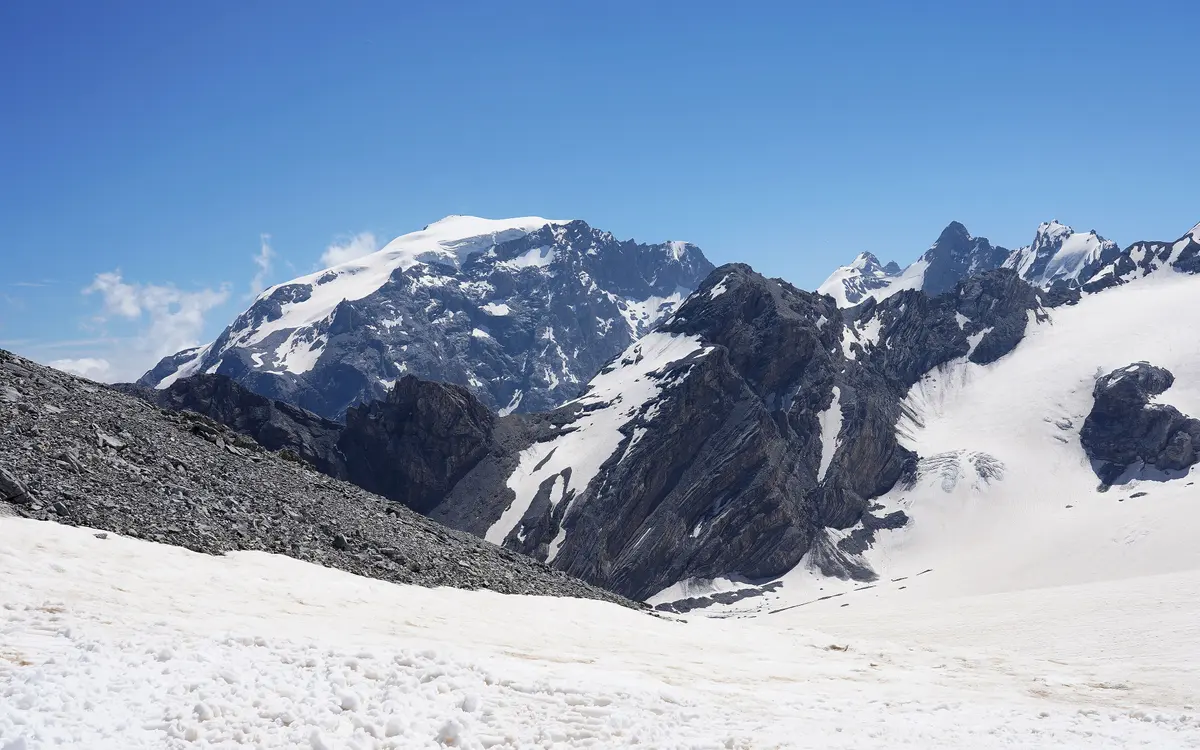
| 15 August | Stelvio / Gentili | IT | Heat reaching high altitudes, no refreezing |
The first entry is the most interesting, and most reports skip over it. Hintertux did not stop because of the snow. Zillertaler Gletscherbahnen named demand in high summer as the main reason. The glacier would have held. The guests stayed away.
With that, Austria lost its only year-round ski area, and for a commercial reason. The other three stopped because of the warmth. Those are not the same thing, and anyone who throws both into one pot is telling a simpler story than the facts support.
The decade that overtook all the others
Show the figures as a table
| Entry | Value |
|---|---|
| 1990s (10 years) | 5 |
| 2000s (10 years) | 7 |
| 2010s (10 years) | 2 |
| 2020s (only 6.6 years so far) | 9 |
Per year the difference is starker still: in the 2000s an average of 0.7 areas per year gave up, in the 2010s 0.2, in the 2020s it is 1.4. The current decade runs at seven times the rate of the previous one.
And the 2010s are not a counter-argument but a pause: after the wave of the 2000s there was simply little left that could still give up.
Who gave up, by country
The complete list, year by year:
Show all 24 discontinued summer ski areas
| Year | Area | Country |
|---|---|---|
| 198x | Cortina / Monte Cristallo | IT |
| 1992 | Laax (Vorab) | CH |
| 1993 | Pitztal glacier | AT |
| 1993 | St. Moritz / Corvatsch | CH |
| 1998 | St. Moritz / Diavolezza | CH |
| 1999 | Verbier / Mont Fort | CH |
| 2000 | Kaunertal glacier | AT |
| 2003 | Stubai glacier | AT |
| 2004 | Glacier 3000 / Gstaad | CH |
| 2006 | Engelberg / Titlis | CH |
| 2006 | Sölden / Ötztal | AT |
| 2007 | Marmolada | IT |
| 2008 | Presena / Tonale pass | IT |
| 2012 | Hochjochferner / Schnalstal | IT |
| 2013 | Cortina / Tofana | IT |
| 2022 | Mölltal glacier | AT |
| 2022 | La Grave / Girose | FR |
| 2022 | Alpe d’Huez / Sarenne | FR |
| 2023 | Kitzsteinhorn / Kaprun | AT |
| 2023 | Dachstein | AT |
| 2026 | Zermatt / Theodul | CH |
| 2026 | Hintertux glacier | AT |
| 2026 | Saas-Fee | CH |
| 2026 | Stelvio / Gentili | IT |
The reason is not the ice
The obvious explanation runs: the glaciers are melting, so the snow is gone. That is true, but it falls short, and the operators themselves say something more precise.
Zermatt and the Stelvio name the same cause, and it is not the daytime heat: the failure of the snowpack to refreeze at night. A summer piste is made of firn. Firn holds if it softens during the day and freezes through again at night. If the night stays too warm, the piste no longer sets on the second day, and by the third it can no longer be groomed. There is still plenty of ice at that point. You still cannot ski on it.
That is exactly why the overnight freezing level is the decisive figure and not the snow depth. We worked it through for the current cold spell: the Theodul glacier now faces nine frosty nights in fifteen days, which is precisely the condition that was missing in July.
What this means, and what it does not
It does not mean that winter sport is ending. All four areas will run in winter, and Saas-Fee said so explicitly. Summer operation was always the exception, not the rule, and in most cases a loss-making one.
Nor does it mean there will never be summer skiing again. Zermatt suspended operations rather than ending them, and says it reassesses the situation daily.
What it does mean: the number of areas even attempting it has fallen from more than twenty in the 1980s to three, and this summer all three closed as well. The buffer is gone. If one gives up next year, there is no reserve left to make up for it.
Read on: The record of vanished summer ski areas · Hintertux gives up year-round skiing · Zermatt stops summer skiing · The cold spell in numbers
Sources and method
- Record: our own dataset (
src/data/sommerski-chronik.json), as of 21 August 2026, 24 entries. It is based on our report “The end of eternal snow” of 22 June 2026. - Completeness: the record makes no claim to completeness for the years before 1992. There is no continuous statistic for that period, and back then a summer operation was rarely ended with an announcement; it simply petered out. The figures from the 1990s onwards are reliable; the statement “more than twenty in the 1980s” is an estimate from the report.
- The 2020s were about two thirds through on 21 August 2026. The comparison with complete decades is therefore conservative: it understates the 2020s rather than exaggerating them.
- Reasons given: announcements by Zillertaler Gletscherbahnen of 26 July 2026, Zermatt Bergbahnen of 31 July 2026, Saastal Bergbahnen of 10 August 2026 and S.I.F.A.S. of 15 August 2026.