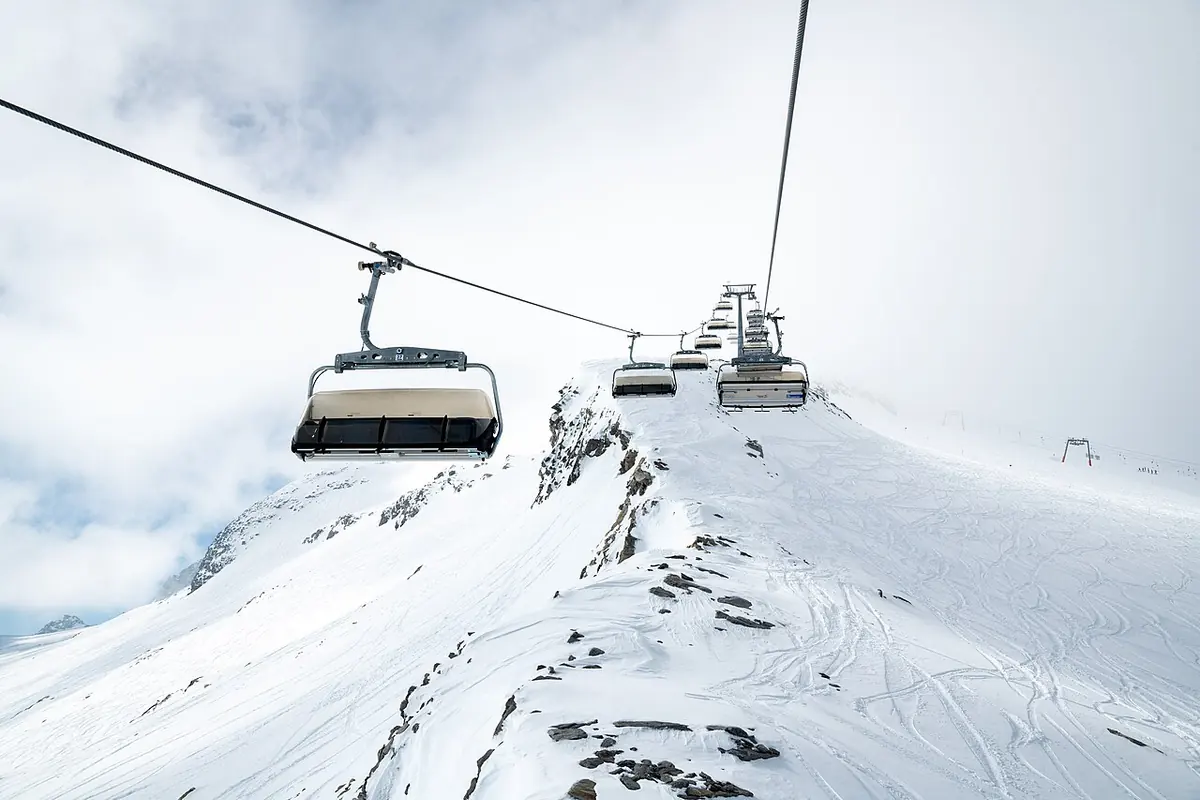
When the end of summer skiing in the Alps gets written about in the coming years, this date will feature: on 26 July 2026 skiing stopped on the Hintertux glacier, and it did not resume. Austria no longer has a year-round ski area.
The remarkable thing is not the decision itself. It is how undramatically it came about.
Four summers, four steps
Until 2022 Hintertux was a year-round ski area in the literal sense: open 365 days, marketed that way for decades, and latterly the only area in Austria with continuous summer skiing. The retreat did not happen at a press conference but across four summers:
Five days became six weeks, six weeks became two months, two months became half a year. Every single step could be explained as an operating decision. Together they add up to an exit.
The reason is not the one you would expect
This is where it gets interesting. The obvious explanation would be: too warm, no snow. But the Zillertaler Gletscherbahnen cite a different reason above all – demand.
In high summer the race teams are on their off-season break, ski instructor training courses have finished, and the holiday guest in the Zillertal is looking for hiking, biking and family activities rather than skiing. A glacier operation with snow groomers, snowmaking, staff and lifts costs the same whether two hundred people are up there or twenty.
That is the more honest and, in a way, more unsettling version of the story: summer skiing does not only die of snow, it dies of arithmetic. And the arithmetic is driven by the warmth – once piste quality in August only holds up in the mornings and the skiable area shrinks, fewer guests come, and then the operation no longer carries itself. Climate change acts here not as a snow shortage but by way of profitability.
That is exactly the pattern we found in every single case in our chronicle of discontinued summer ski areas: first individual pauses, then shorter seasons, eventually the final closure. Hardly any of these areas ever said “we are stopping”.
What is left
After the Hintertux retreat and the operating halt in Zermatt at the end of July, high summer 2026 in the Alps looks like this:
| Resort | Country | Status in August 2026 |
|---|---|---|
| Stelvio Pass / Passo dello Stelvio | IT | operating, season until 1 November |
| Saas-Fee | CH | last day 9 August, suspended thereafter |
| Zermatt | CH | halted since 31 July |
| Hintertux glacier | AT | closed since 26 July |
One. With Saas-Fee suspending too, a single area carries summer skiing in the Alps from 10 August. Why those two and not the highest ski area in the Alps is unpacked in our comparison of the altitude bands.
What this means for Hintertux itself
Not the end of the ski area. Hintertux remains one of Austria’s most snow-sure winter resorts, with skiing from autumn into early summer and a glacier that carries again from September. What ends is the promise of “365 days”.
For the region that is more than marketing. Year-round operation was for decades the Tux valley’s distinguishing feature against the rest of the Zillertal. Giving it up means repositioning – as a summer hiking destination with a glacier lift rather than a ski area in August.
And it means a line disappears from the brochure that had been true for forty years.
As of 4 August 2026. The Zillertaler Gletscherbahnen have announced no date for resuming summer operations in 2026; winter operations are unaffected.
Sources: schneehoehen.de on the summer pause at the Hintertux glacier, snowsportsnews.com, Wikipedia on the Hintertux glacier, statements by the Zillertaler Gletscherbahnen.