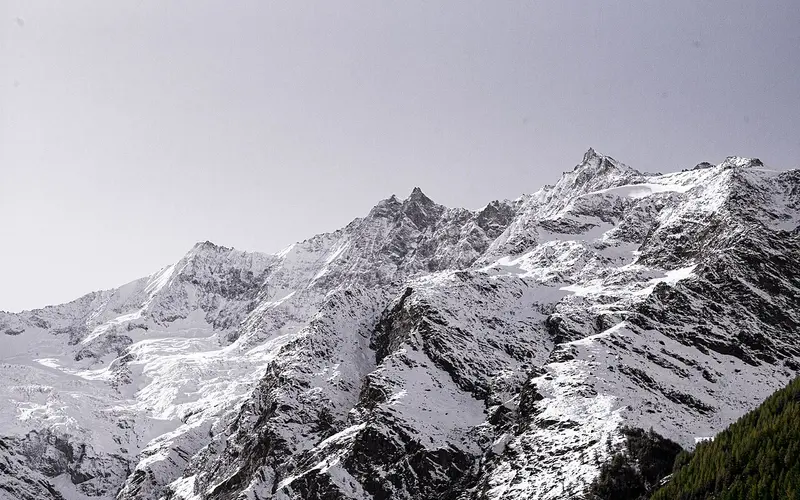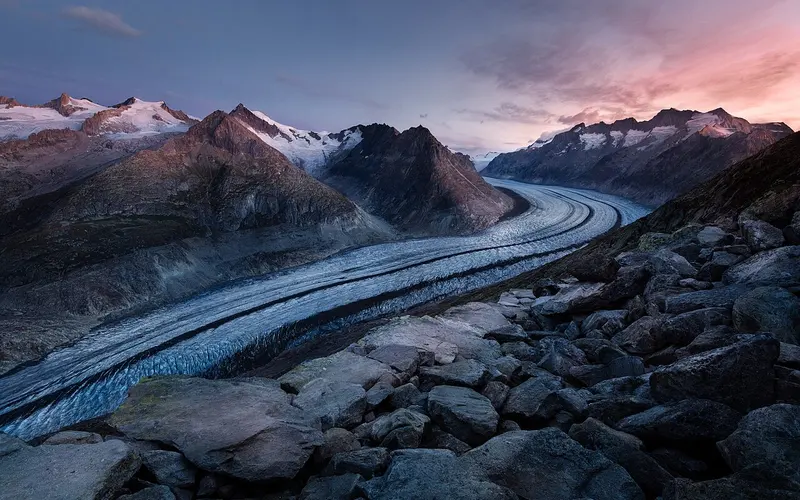
There is one date that glaciologists await with tension every year: the glacier loss day – the day on which the winter’s snow reserves on the glaciers are used up. From then on, every warm hour eats directly into the ice. In 2026 that day fell on 29 June. It has only ever been earlier in the disaster year 2022 (26 June).
Why it became so serious so early this year
Three factors came together, as GLAMOS head Matthias Huss explains:
- A snow-poor winter in 2025/26 – the protective snow cover was thin from the outset.
- An exceptionally hot May – the melt started weeks too early.
- The current heatwave – enormous melt rates are being measured across the Alps.
How serious the situation is became clear at the end of June on the Dufourspitze: at 4,634 metres – the highest point in Switzerland – the temperature rose to as much as +2.9 °C. That was only the third time since records began in 1954 that the freezing point has been exceeded up there. When even 4,600 metres is above zero, no Swiss glacier is receiving snow any more, only rain.
What GLAMOS actually measures
The Swiss glacier monitoring network GLAMOS (Glacier Monitoring Switzerland, run by ETH Zurich, the WSL and several universities) observes the glaciers in two ways:
- Directly on the ice: stakes drilled into the glacier. They show to the centimetre how much ice is disappearing at a given point.
- In a model: for the roughly 400 largest Swiss glaciers, a model calculates the balance of snow cover and melt daily. That produces a live picture of the season long before the official annual balance is published in autumn.
For the longer view: since the 1970s, average temperatures in the Swiss Alps have risen by roughly 3 °C. The Swiss glacier surface has approximately halved since 1973, and the years 2022 and 2023 alone cost around a tenth of the remaining ice volume.
What this means for the 2026 ski autumn
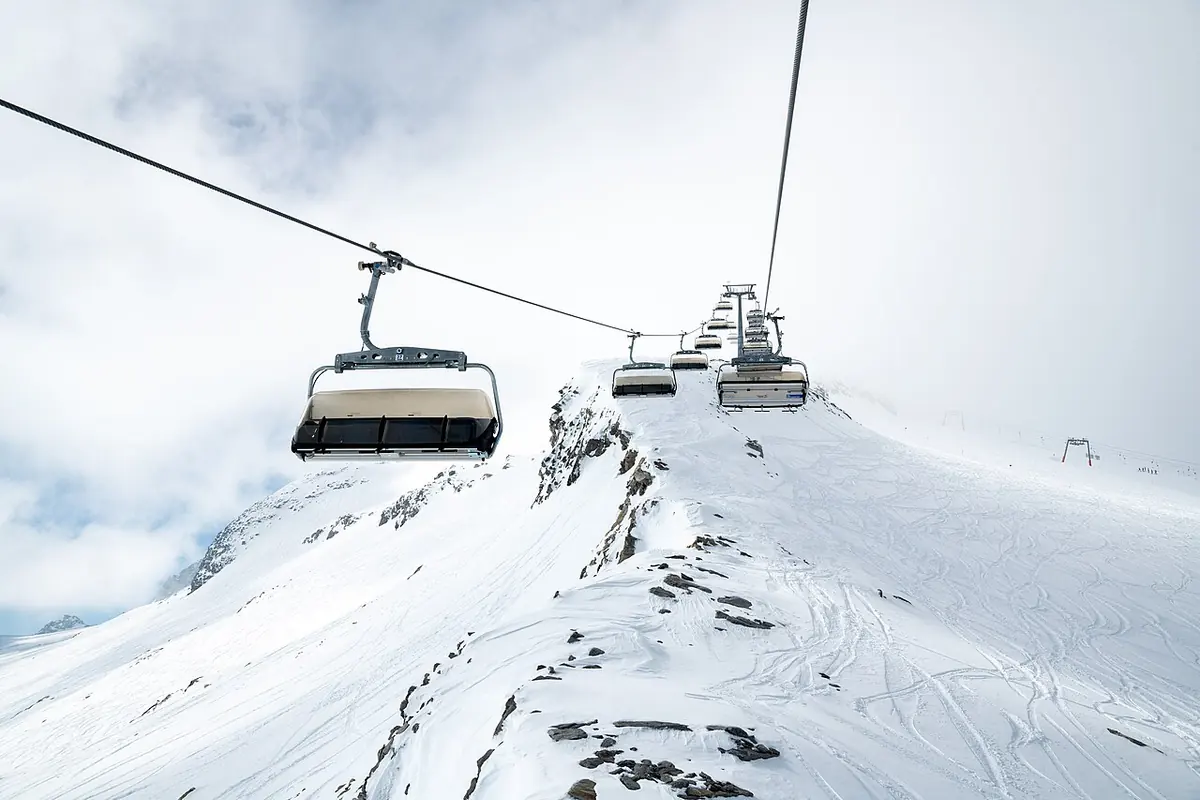
For the glacier ski areas, an early glacier loss day is an alarm signal: without a protective snow cover the ice melts out, crevasses open, and grooming becomes laborious or impossible. In concrete terms:
- Zermatt has the best hand with the highest-lying slopes in Europe, but is also operating day by day.
- Saas-Fee started its glacier season on schedule in mid-July – the plateau at 3,500 m benefits from its altitude.
- The Stelvio Pass showed in 2022 how fast it can happen: operations stood still for two months in the middle of high summer.
Whether 2026 becomes a second 2022 will be decided in the coming weeks. We will update this assessment as soon as GLAMOS publishes new figures.
Sources: GLAMOS / ETH Zurich (glacier loss day, modelling), MeteoSwiss (freezing level), reporting by watson/20min/Spektrum on the 2026 heatwave. Detailed figures on long-term melt: glacier section.