The winter of 2025/26 was the deadliest in Europe for eight years. 146 people died in avalanches, more than twice as many as the previous winter and around 40 per cent above the mean of the past twenty years.
In Switzerland the same season looks different, and the difference is the real story. Here the number of avalanche accidents rose sharply, while the number of deaths barely moved.
The cascade
The SLF records more than fatalities. It tracks the whole chain: reported accidents, people caught, complete burials, deaths. Up to 30 March 2026 it looked like this.
| Winter 2025/26 | 10-year mean | |
|---|---|---|
| Avalanche accidents | 171 | 124 |
| People caught | 244 | 182 |
| Completely buried | 37 | 31 |
| Fatalities | 15 | 14 |
Four rows, and in each one the gap to the mean gets smaller:
This is not a rounding effect. Had those 171 accidents carried the same lethality as the average of the past ten years, the winter would have cost around 21 lives rather than 15.
What might explain it, and what we do not know
Caution is warranted here, because the obvious explanation is not the only one.
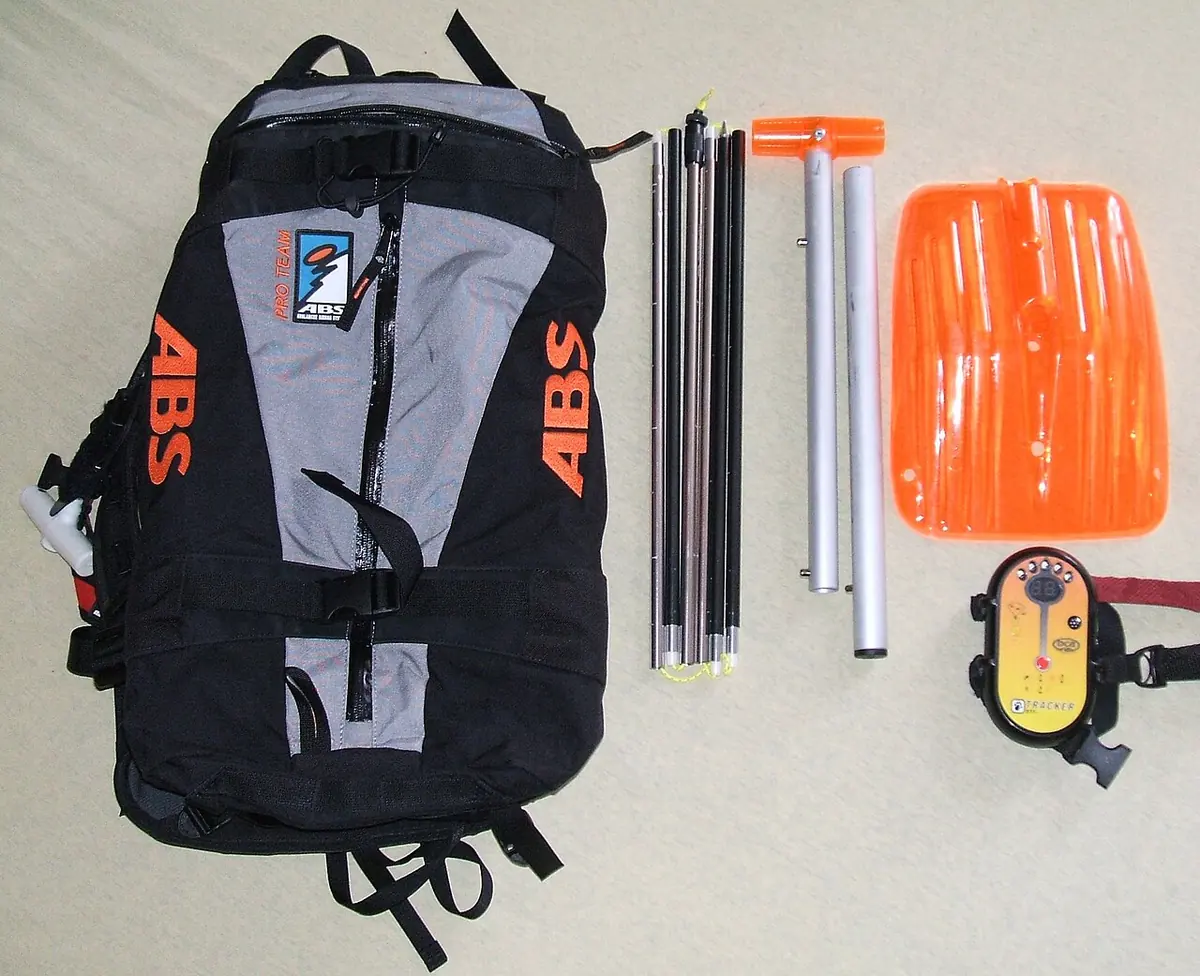
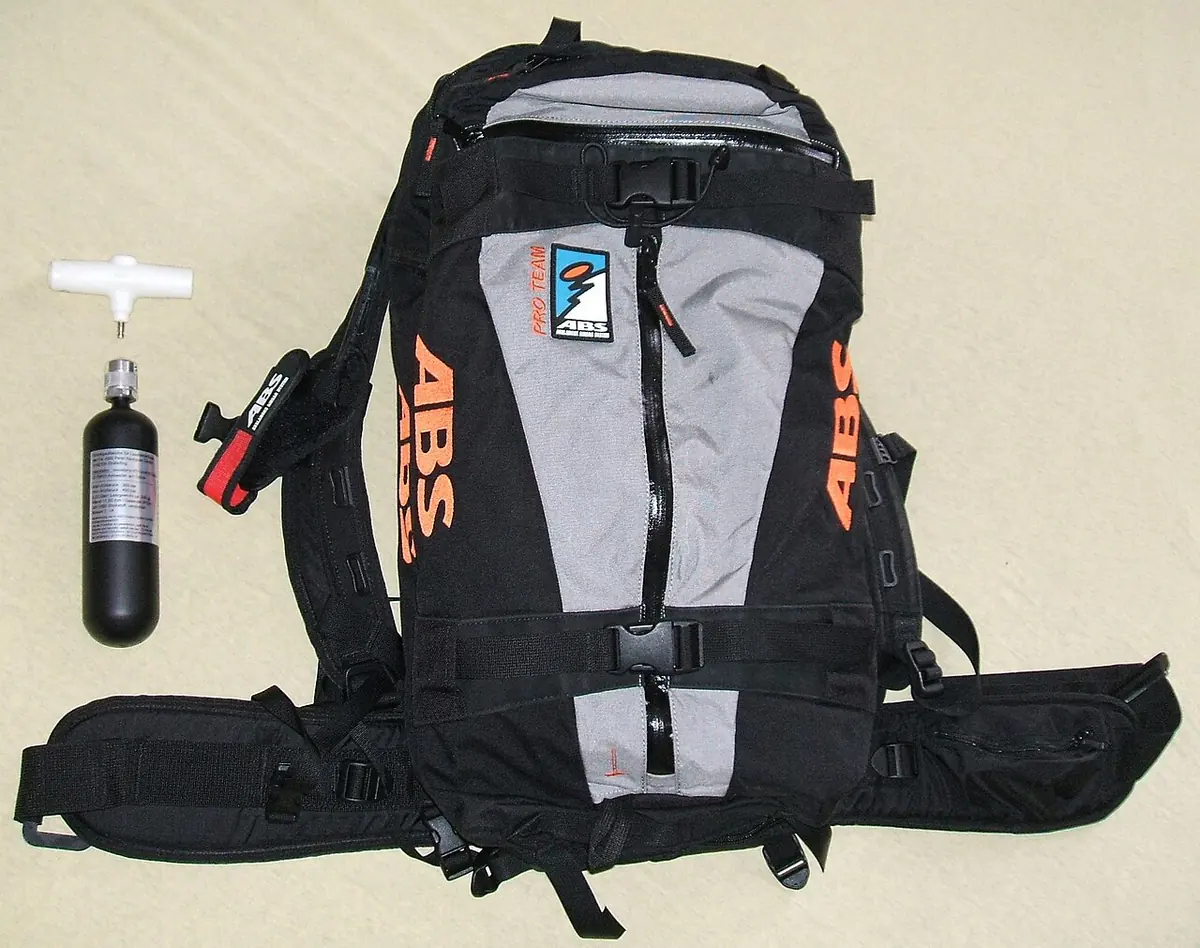
The flattering reading: equipment and rescue have improved. Airbags are widespread, transceivers search faster, and companion rescue is better practised than it was twenty years ago. With 37 complete burials and 15 deaths, well over half of those fully buried survived this winter. The long-run Swiss figure for complete burials in the backcountry is around 50 per cent.
The uncomfortable reading: a large share of the extra accidents were smaller avalanches that buried nobody completely. In that case the survival rate did not rise at all, only the number of harmless events did. The figures lend this some support: complete burials rose by 19 per cent, far less than accidents at 38.
Both are probably true in part. Separating them cleanly would require the avalanche size for each accident, and the interim tally does not give it. We would rather leave that as an open question than pick the prettier version.
Which average are we talking about?
Research this and you find both “an above-average number of fatalities” and “below the long-term mean”, written about the same winter. Both are correct, because they use different means.
| Reference | Avalanche deaths per winter |
|---|---|
| Mean since 1936/37, 89 winters | 24 |
| Highest 20-year mean ever reached | 31 |
| Current 20-year mean | 21 |
| Ten-year mean to end of March | 14 |
| Winter 2025/26 to 30 March | 15 |
Against the ten-year mean this winter sits slightly above. Against the 20-year mean it sits a third below. Anyone building a headline can take their pick.
The honest summary: the number of avalanche deaths in Switzerland has been falling for decades, from 24 in the long-run mean, through 31 in the worst twenty-year window, to 21 today. Seen against that, 2025/26 is a normal winter with a strikingly high number of accidents.
Three further deaths occurred over Easter, in separate incidents, after the 30 March cut-off. For the winter as a whole Switzerland stands at roughly 18.
Europe: 146 dead
Across Europe the picture is clearer. Switzerland accounted for only a small share of the victims in 2025/26.
Show the figures as a table
| Entry | Value |
|---|---|
| Italy | 33 |
| France | 31 |
| Austria | 29 |
| Switzerland | 15 |
| others (all remaining) | 19 |
Italy ahead of France ahead of Austria, with Switzerland fourth. The Italian figure stands out: ski touring in the southern Alps has grown faster there than anywhere else in recent years.
Set against the historical record, the winter ranks like this:
Show the figures as a table
| Entry | Value |
|---|---|
| 2009/10 | 194 |
| 2017/18 | 147 |
| 2020/21 | 131 |
| 2024/25 | 70 |
| 2025/26 | 146 |
The point not to skip past: the record still stands at 194, in the winter of 2009/10. 146 is a great many, but it is not a maximum. Anyone calling this the worst winter on record is counting back one decade.
What made the winter dangerous
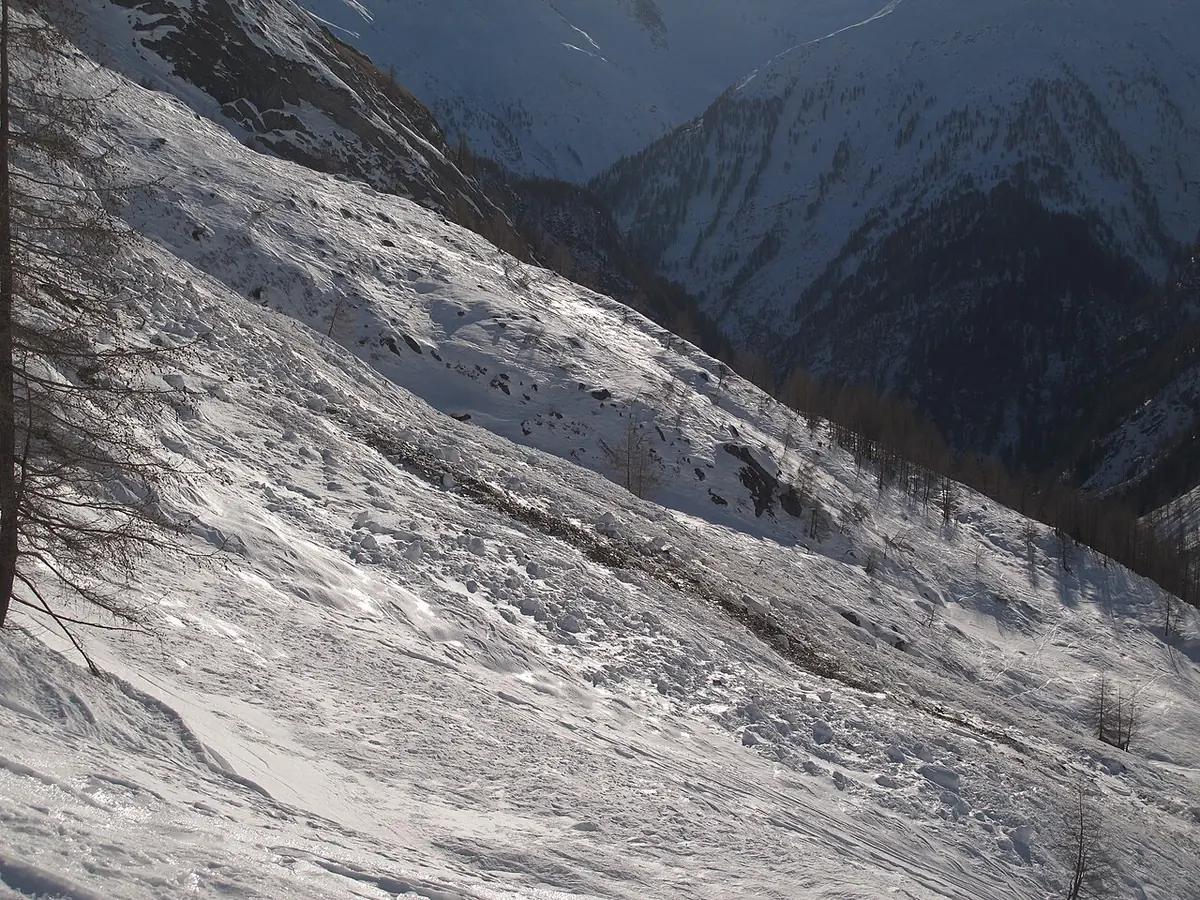
Every avalanche warning service names the same cause: a deeply buried weak layer of faceted crystals, known in the trade as the persistent weak layer problem, or in German as the Altschneeproblem.
It formed in late November and December. A thin, early snowpack was followed by a long anticyclonic spell with clear, cold nights. Between ground at around 0 degrees and a surface at minus 5 to minus 20, a temperature gradient built up, and in that gradient large, poorly bonded crystals grow. The snow that fell later settled on top as a slab.
“These persistent weak layer problems are extremely difficult for backcountry users to assess, because even experts cannot determine where the snow might release, since the weak layer is not visible at the surface.”
Benjamin Zweifel, SLF
That explains two observations from this winter that otherwise look contradictory.
First: from 10 January to 22 February, human-triggered avalanches were reported every single day. Six weeks without one quiet day. A weak layer sitting at the base of the snowpack does not break down. It waits.
Second: on 17 February danger level 5 applied, the highest level, for the first time since 28 January 2021. In the days before, between 10 and 13 February, 100 to 150 centimetres of new snow had fallen in western and northern Valais, followed by another 90 to 140 between 18 and 22 February.
Who it caught is equally striking: a large share of the victims were experienced ski tourers and freeriders with local knowledge. That fits the pattern. A weak layer you cannot see devalues exactly the experience you would otherwise rely on.
How such a layer forms and why it lasts for months we have written up separately: the persistent weak layer explained.
What follows from it
Three thoughts that outlast the seasonal tally.
The death count is a poor leading indicator. It fluctuates wildly, it hangs on accidents of burial depth and group size, and it responds late. To judge how dangerous a winter was, look at the number of accidents and complete burials. On those, 2025/26 sat clearly above the mean while the death toll stayed almost unremarkable.
The long-term trend points down, even though far more people are out there. Ski touring and freeriding have become markedly more popular over fifteen years, and the number of deaths has fallen anyway. That argues that training, equipment and the bulletin genuinely work. It is one of the few areas in mountain sport where this is so clearly measurable.
Danger level 3 remains the critical band. Around half of all avalanche deaths occur at “considerable”, not during the rare extreme situations. Why that is, and why level 3 is not the middle of the scale, is set out in our piece on the five avalanche danger levels.
Sources and caveats
- SLF (WSL Institute for Snow and Avalanche Research), interim tally for the winter of 2025/26 to 30 March 2026: 171 accidents, 244 people caught, 37 complete burials, 15 deaths, against ten-year means of 124, 182, 31 and 14. Quotation from Benjamin Zweifel from the same source.
- SLF, long-term statistics: mean since 1936/37 of 24 deaths per winter, highest 20-year mean 31, current 20-year mean 21. Survival rate for those completely buried in the backcountry around 50 per cent.
- European figures: 146 deaths in the 2025/26 season, 70 the previous winter, twenty-year mean 104.35, maximum 194 in the winter of 2009/10. Country breakdown as of 16 March 2026 (127 deaths at that point): Italy 33, France 31, Austria 29, Switzerland 15.
- The interim tally ends on 30 March; the hydrological year does not. Three further deaths over Easter are not included in the 15. Comparisons between countries should be read with care, because recording thresholds are not identical everywhere.
This piece puts figures in context and is not training. Anyone travelling in the backcountry learns that from the SLF and the SAC, not from a magazine article.