The question is usually put the wrong way round. It is not “rent or buy”, it is “how many days, and spread how”. Rental pricing is tiered, and the tiering is steeper than most people assume.
What renting costs
From the price list of a Swiss rental network, as of August 2026:
| 1 day | 7 days | 7 days at the daily rate would be | |
|---|---|---|---|
| Ski set Economy (skis, bindings, boots) | CHF 69 | CHF 293 | 483 |
| Ski set Premium | CHF 88 | CHF 374 | 616 |
| Skis only, Economy | CHF 45 | CHF 191 | 315 |
| Boots only, Economy | CHF 24 | CHF 102 | 168 |
| Helmet | CHF 12 | CHF 45 | 84 |
So a week does not cost seven times a day, it costs about four times. A rental day inside a weekly package works out at roughly CHF 42 instead of 69.
That is where the answer lives.
The calculation
A usable set of your own for a beginner or intermediate, meaning skis with bindings, boots, poles and a helmet, costs roughly CHF 600 to 1400 new depending on brand and model year. We show three tiers, because the answer depends heavily on how much you spend.
The short version:
Rent if you do one or two ski weeks a winter. Seven days Economy is CHF 293. Even across three winters that stays under 900 francs, and you ski on freshly serviced, current equipment every year.
Buy if you ski many separate days across the winter. Ten day trips cost CHF 690 to rent, which buys a set outright. From the second winter you ski effectively for free.
The borderline case is one week plus a handful of days. There a mixture usually wins, and that is the next section.
What the break-even sum leaves out
Three items that make buying dearer than it looks:
- Servicing. Edge grinding and waxing runs CHF 40 to 80 a season if you have it done. Rental gear arrives serviced.
- Ageing. Ski boots lose their padding after roughly five years whether you ski or not. Bindings need periodic checking.
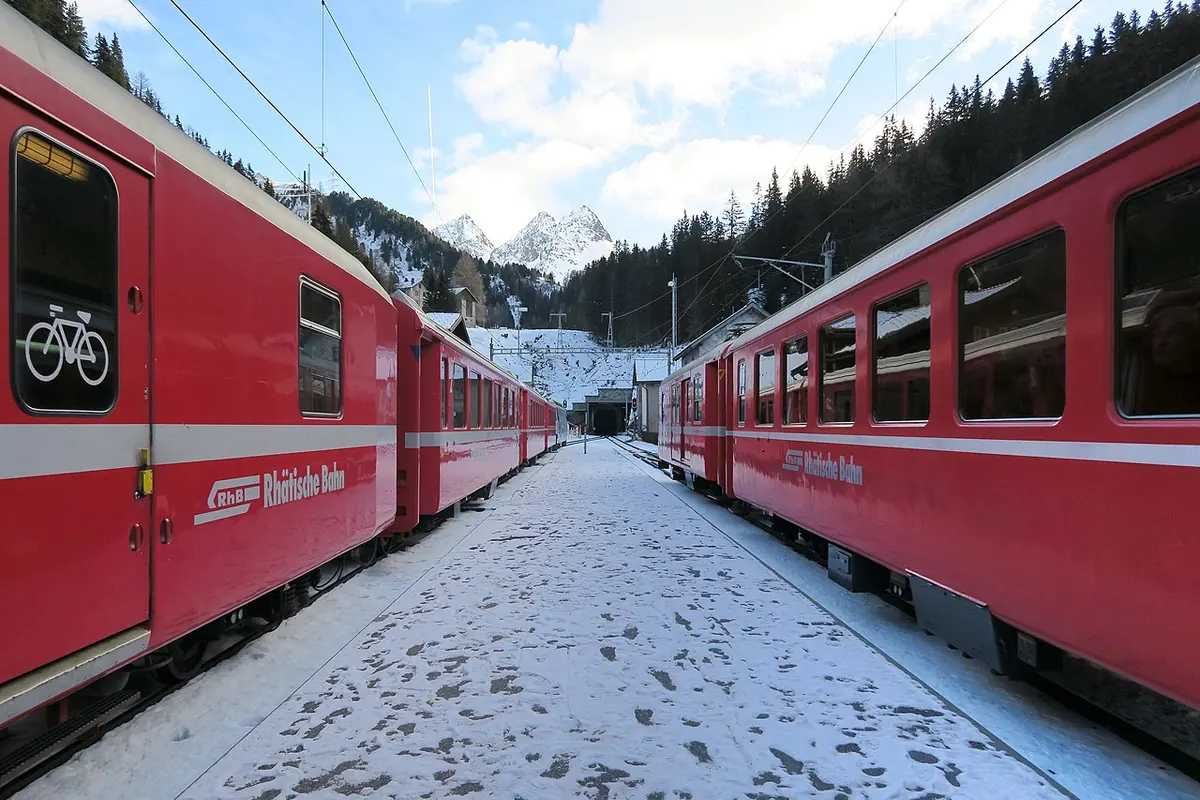
- Transport. If you travel without a car, you carry your equipment through two stations and two changes. That is why the sum works out differently for rail travellers than the raw numbers suggest.
And two that make buying cheaper:
- Second hand. A previous season’s model or a used ski costs half and moves the break-even to four to six days.
- Fit. Your own, fitted boots are the single largest comfort gain available, and no rental shop can supply it.
The recommendation that almost always holds
If you buy only one thing: buy the boots.
The reason is fit, not money. The boot decides control, and whether the afternoon is a pleasure or hurts. Rental boots are built for average feet and have been packed out by a hundred people before you.
Your own boots cost roughly CHF 250 to 500 new and last five to eight seasons. Rented they are CHF 24 a day or 102 a week. Ski two weeks a winter and they pay for themselves in about two winters.
You then keep renting the skis, with the pleasant side effect of trying something different each year. Skis only, Economy, is CHF 45 a day or 191 a week.
You should own the helmet too. It costs from about CHF 80, rents at 12 a day, and belongs in the bin after any impact to the head. With a rental helmet you have no way of knowing whether that already happened.
Where to rent
Three routes, with their differences.
At the resort, by the valley station. The normal case and usually the right one. You carry nothing, you can swap in the morning if the ski does not suit, and if something goes wrong you are ten minutes from the shop. In exchange, the highest price.
In the village below the lift. Often a few francs cheaper than at the lift itself, but you carry the gear to the station. Worth it for longer stays.
At home, before you leave. Noticeably cheaper, especially at the chains and especially on weekly packages. But you transport everything yourself, and if the boot pinches on day two you are 150 kilometres from the shop. For rail travellers this is the worst option.
Booking online in advance nearly always pays. Rental shops usually discount advance bookings, and in the holiday weeks the queue at nine in the morning is long and the choice is thin.
What to check when you collect
- The binding setting. It is set from weight, height, boot sole length and ability. Be honest about how well you ski; overstate it and you get a stiffer release setting, which then will not release in a fall.
- Keep the boot on for twenty minutes in the shop. Pressure points do not show up in two minutes. A boot that pinches in the shop will not improve on the mountain.
- The edges. Run a fingernail across the edge. If nothing is scraped off, the ski is blunt, and on hard piste you will slide.
- Whether the helmet is included. It often is not, and it costs extra.
And the rest of the day
Equipment is one item among several. What a ski day costs in total, with travel, lift pass and food, we worked out separately: what a Swiss ski day really costs.
Sources and caveats
- Rental prices: price list of the INTERSPORT Rent Network Switzerland, retrieved August 2026, VAT included. Prices vary between locations; this is a network list, not a national fixed tariff.
- Purchase prices: the CHF 600 to 1400 range for a complete set is an orientation drawn from usual entry and mid-range pricing, not a dataset we collected. That is why we give three tiers rather than one number, so you can insert your own. The formula is simple: purchase price divided by 69 gives the break-even in days against daily rental, divided by 42 against weekly rental.
- Servicing costs and lifespan are industry rules of thumb, not measured figures. We write them as orders of magnitude, not as prices.