In July 2026, five metres of snow fell in eight days in the Chilean Andes. In the same summer, Zermatt shut down summer skiing because it was too warm. Put those side by side and you quickly hear two sentences, both of which are wrong: “See, warming isn’t real” and “That’s all the climate crisis”.
The distinction behind it is simple, but it gets muddled constantly.
The short version
Weather is the state of the atmosphere right now, in one place. Climate is the statistics of weather over a long period, usually 30 years.
A common way to remember it: weather decides what you put on today. Climate decides what hangs in your wardrobe.
A single day, a single storm, a single summer are weather. Whether the contents of the wardrobe change over decades is climate.
What that means in practice
| Weather | Climate | |
|---|---|---|
| Timescale | hours to weeks | decades, 30 years by convention |
| Question | What is it like right now? | What is normal here? |
| Predictable | usefully, a few days out | as a trend, not as a single day |
| Example | 41.8 °C at Möckern-Drewitz | number of hot days per decade |
- A single year, that is weather
- The trend across decades, that is climate
- A cool year despite the rising trend
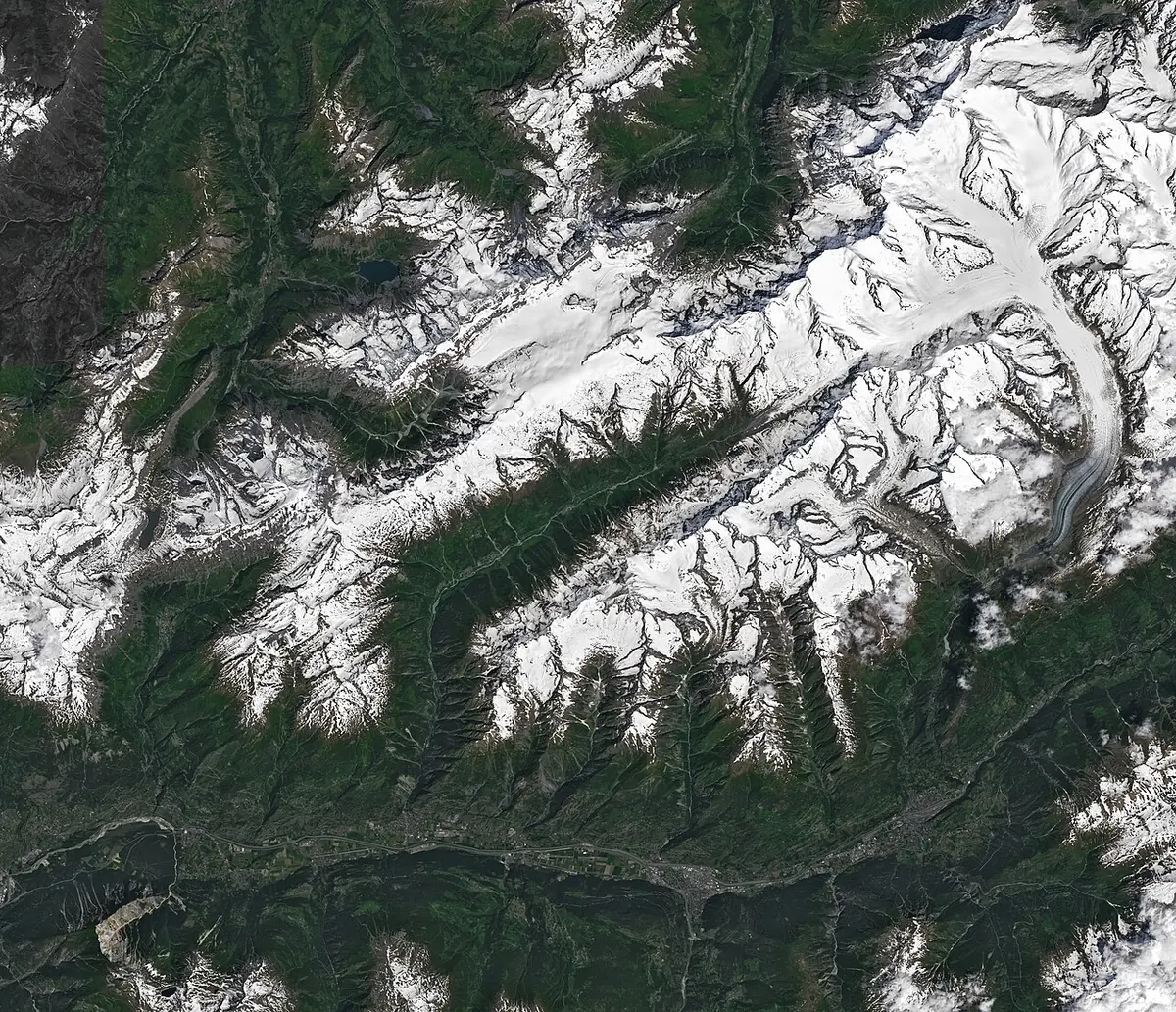
That is why you can say both at once without contradicting yourself: July 2026 brought the Andes a record winter and the Alpine glaciers have been losing mass for decades. One is a snapshot, the other a time series.
Why extremes increase in both directions
A point that often gets left out: a warmer atmosphere does not just mean “warmer everywhere”, it also means wetter. For every degree of warming, air can hold roughly 7 per cent more water vapour. That relationship is physics, not a modelling assumption.
The consequence is awkward for simple narratives: when such an air mass unloads as rain or snow, there is more water available. That is why record precipitation and record heat can both become more frequent. The storm in the Andes was what is called an atmospheric river – exactly this kind of very moist band of air.
One caveat remains: that does not yet say this particular storm would not have happened without warming. Making that link is the job of attribution science, and it needs computing time and data, not gut feeling.
How to spot a serious claim
Three test questions that usually suffice in everyday life:
- Is a period named? “The warmest June since records began in 1864” can be checked. “Warmer than ever” cannot.
- A single value or a series? One record day proves little. The number of hot days per decade proves a lot.
- A source with a measuring network? Weather services such as MeteoSwiss, the DWD or Météo France run their own stations. A screenshot of a weather app is not a source.
And for skiers?
For the question “what will the coming winter be like?”, the answer is sobering: that is weather, and weather cannot be forecast seriously beyond about ten days. Seasonal outlooks work with probabilities, not snow depths – more on that in El Niño and the 2026/27 winter.
For the question “what will glacier skiing look like in 20 years?”, it is climate, and there the data is unambiguous. Glaciers are a store: what one summer takes away does not come back in a cool year. Which is why the sequence of the summers of 2003, 2015, 2018, 2022 and 2026 says more than any one of them. The concrete figures are in the glacier section and in the chronicle of summer ski areas.
Sources: definitions following the WMO (30-year climate normal period) and MeteoSwiss. On the relationship between temperature and water vapour capacity: the Clausius-Clapeyron relation, around 7 per cent per degree. This piece is an explainer and is updated as needed; it does not report on a single event.